Bumble Premium Review Looks at Whether Incognito Mode Is Worth Paying For
A teacher opens a dating app after work and suddenly wonders whether one of her students could see her profile. A doctor has a similar worry about patients, coworkers, or anyone who knows them offline. Dating is private until the audience stops being private. This bumble premium review looks at what that invisibility costs when privacy becomes a paid feature.
Bumble’s Incognito Mode hides your profile from other users unless you swipe right on them first. That sounds simple, but it changes the way discovery works. Instead of letting the wider pool find you, you decide who gets the opportunity to see you. The upside is control. The downside is fewer chances for unexpected matches.
Dating App Privacy Is Really About Controlling Who Gets Access
For professionals with a visible offline life, dating app privacy can be worth more than another pile of likes. A teacher may not want students seeing a personal profile. A doctor may prefer not to appear in a patient’s swipe queue. Someone working in a small office may simply want to avoid colleagues becoming accidental spectators.
Bumble says Incognito Mode hides your profile from everyone except people you have swiped right on. It is included with Bumble Premium and Premium+, and Bumble presents it as a way to control who can see your photos and personal information.
That gives the feature a clear practical purpose:
- Less accidental exposure to people outside your dating life.
- More control over who gets access to your profile.
- Fewer awkward encounters with colleagues, acquaintances, or people from your professional circle.
- More deliberate dating because discovery starts with your own right swipe.
Still, Incognito is not a magic privacy shield. It controls profile visibility inside Bumble; it does not make your account invisible to Bumble or guarantee that nobody can ever recognise you elsewhere. Dating apps also involve sensitive personal information, which is why privacy should be considered more broadly than simply hiding a profile.
For someone whose main fear is unwanted discovery, that control may be the actual product they are paying for.
What Incognito Mode Actually Changes About Your Bumble Profile
The feature is easier to judge once its mechanics are separated from the marketing.
Your profile starts outside the normal discovery pool
With Incognito switched on, Bumble says other users will not see your profile unless you have already liked them. You can still browse and swipe normally, but your visibility follows your choices.
You Have To Make The First Visibility Move
This is the biggest trade-off. Imagine 100 potentially compatible people are nearby. If you only swipe right on 10, those 10 become the group with a chance to see you. People you never select do not get the same opportunity to discover you.
That can feel wonderfully private. It can also shrink your dating funnel.
A Right Swipe Does Not Guarantee A Match
Incognito controls access, not attraction. Someone can see your profile after you like them and still swipe left. They might be inactive, looking for something different, or simply not interested.
So Premium should not be judged as a match generator. Its value depends on the problem you want solved.
It Is Not A Personal Blacklist
If you are worried about one particular ex, colleague, or neighbour, do not assume Incognito works like a custom blocking list. Its basic rule is broader: people you have not liked do not get to see you while the mode is active.
Availability Can Depend On Platform And Market
Bumble’s help pages say Incognito is not available on Bumble Web in some regions, while its current feature page lists it for Premium and Premium+. Subscription options and prices can also vary by market, so the price shown inside your own app is more useful than an old screenshot from another country.
Paid Features Comparison Shows Why Incognito Is Only One Part Of Premium

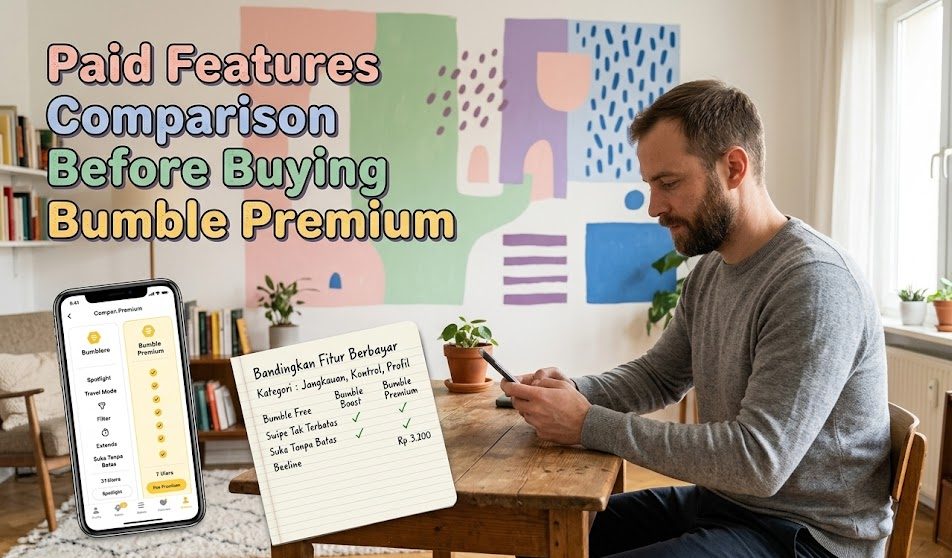
Bumble Premium is not simply an Incognito subscription. Bumble currently lists unlimited swipes, Liked You, Advanced Filters, Backtrack, match extensions, rematches, Travel Mode, Spotlight, SuperSwipes, and Incognito Mode among its Premium benefits.
| Feature | Main Benefit | Best Fit |
| Incognito Mode | Controls profile visibility | Privacy-conscious users |
| Unlimited swipes | Removes swipe limits | Frequent swipers |
| Liked You | Shows existing admirers | Faster filtering |
| Advanced Filters | Narrows discovery | Selective daters |
| Travel Mode | Changes your dating location | Frequent travellers |
| Backtrack | Undoes a left swipe | Accidental swipers |
| Spotlight | Increases visibility temporarily | Users seeking reach |
| SuperSwipe | Signals stronger interest | Users who want to stand out |
The interesting part is that these tools solve different problems. Incognito reduces exposure, while Spotlight increases it. Filters narrow the pool, while unlimited swipes encourage more exploration.
That is why a useful paid features comparison should begin with behaviour, not the number of features listed on the subscription screen.
If you are comparing Bumble with another service, it is also worth looking beyond premium badges and asking how matching itself works. A different approach, such as personality-based matching, can change the value equation completely. This Elite Singles review and personality test breakdown is a useful reference point.
Dating App Economics Makes Privacy A Different Kind Of ROI
The usual question about a dating subscription is, “Will I get more matches?” Incognito needs a different calculation.
Dating app economics becomes interesting when the product being sold is not more exposure but less unwanted exposure. If being seen by the wrong person could create genuine professional discomfort, paying for control can make sense even if your match count does not rise.
Consider three users:
- The public professional values discretion because work and dating should stay separate.
- The selective dater already prefers choosing a small number of people.
- The casual explorer enjoys being discovered and has little concern about who sees the profile.
The first two have a stronger reason to pay for Incognito. The third may get more value from ordinary discovery.
There is also an opportunity cost. Someone you would have liked might discover you first in normal mode, but Incognito removes that possibility until you make the first move. Privacy therefore comes at the price of some passive discovery.
That does not make the feature bad. It simply means you are trading reach for control.
A recent Bumble user discussion shows how this can feel in practice. One user tracking activity while using Incognito reported that only a small proportion of people they liked appeared to reach their profile. That is one person’s experience, not a platform-wide statistic, but it illustrates the basic limitation of a highly selective visibility model.
For a professional who values privacy, that trade-off can make the subscription feel more reasonable than it looks at first glance.
The strongest case looks like this:
- You have a real reason to control who sees your profile.
- You are comfortable making the first move through right swipes.
- You will use other Premium tools as well.
- You care more about intentional discovery than maximum exposure.
Swiping Efficiency Depends On Whether You Want Control Or Discovery
Swiping efficiency does not always mean swiping faster. For some people, it means spending less time on irrelevant profiles. For others, it means getting as many promising profiles as possible.
Incognito favours the first definition.
A sensible approach is to make each right swipe more intentional:
- Set a realistic location and age range.
- Use profile details, not just the first photo, to decide.
- Swipe right only when you would genuinely welcome a match.
- Review conversations and matches after a week or two.
- If the pool feels too small, loosen your criteria before blaming Premium.
The biggest mistake is assuming fewer profiles automatically mean better dating. They do not. Incognito works best when privacy itself is part of your dating goal.
If you like being selective, the feature can make the app feel calmer. If you want serendipity, it can make Bumble feel strangely quiet.
Bumble Premium Review And The Real Cost Of Incognito Mode
For this bumble premium review, the verdict is fairly straightforward. Incognito Mode can be worth paying for when unwanted visibility is a genuine problem, especially for people whose professional or social circles overlap heavily with their dating pool.
It is harder to justify when privacy is only a mild preference and Incognito is the only Premium feature you would use.
The weaker case is someone who wants the biggest possible dating pool, enjoys receiving unexpected likes, and rarely uses filters or other Premium features.
In other words, you are not really paying for more romance. You are paying for a different level of control. That is a legitimate benefit, but only if control is what you actually need.
Q&A
Can People See Me On Bumble While Incognito Mode Is Active?
Bumble says your profile is hidden from other users unless you have swiped right on them first. The feature is therefore about controlled visibility, not total anonymity.
Does Incognito Mode Increase Match Rates?
No. It changes who can discover you, but it does not make those people more likely to match. A smaller audience can mean fewer matches even when the matches you get are more intentional.
Should I Buy Premium Only For Incognito?
Only if avoiding unwanted exposure is valuable enough to justify the subscription. If privacy is not a major concern, the other Premium benefits need to earn their place in your budget.

Leave a Reply