Muzz App Features Put Privacy First With Photo Blurring And Controlled Access
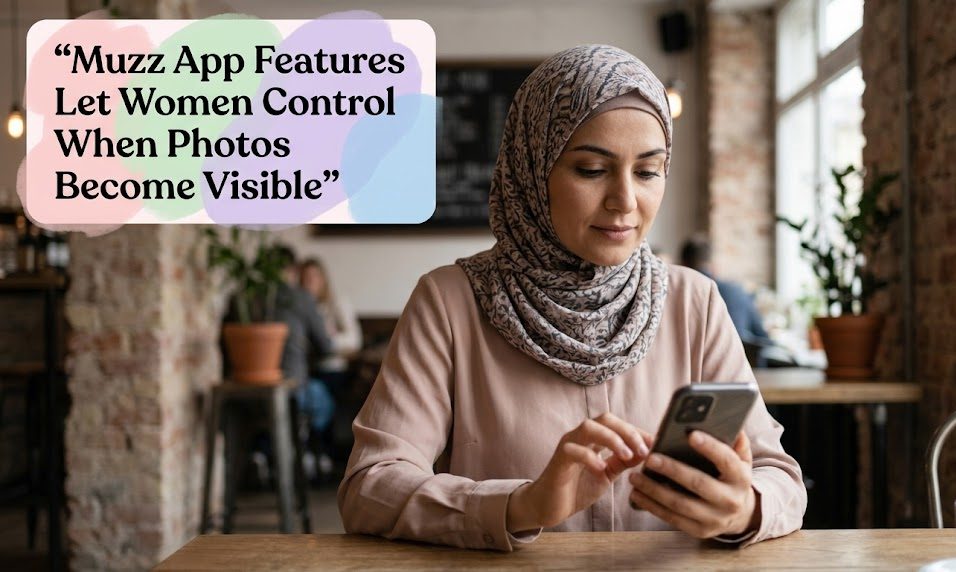
Mainstream dating apps have spent years making faces the first thing people see. Swipe, judge the photo, decide in seconds, move on. That design can work for casual discovery, but it does not suit everyone, especially women who want more control over when their images become visible. The muzz app features approach takes the opposite route by making privacy part of the product experience rather than something users have to manage after a problem occurs.
Muzz was built specifically for Muslim singles looking for love and marriage, and its privacy tools reflect that positioning. Women can blur their profile photos and choose when to reveal them to individual matches. The app also uses selfie verification, blocks screenshots and recordings across the app, and offers visibility controls that let users hide their entire profile.
Muzz App Features Challenge The Swipe First Approach To Dating
The most interesting thing about Muzz is not simply that it has a photo-blurring button. It is the design philosophy behind that button.
On many dating platforms, the photo is effectively the entrance ticket. You see someone’s face first, then perhaps read their bio if the image catches your attention. Muzz gives users another option: make the profile less visually exposed and allow other parts of the person to carry more weight.
That matters for people who see modesty as part of how they want to date.
Photo Blurring Lets Women Decide When Their Face Becomes Visible
Muzz says women can blur their profile photos from other members and reveal them only when they feel comfortable. Photos can also be made private again, including automatically after blocking or unmatching.
This creates a simple but meaningful change in user control.
Instead of:
Photo → attraction → profile → conversation
the experience can become:
Profile → values → conversation → trust → photo
That does not eliminate physical attraction. It simply delays when the visual part enters the interaction.
Mutual Blur Pushes Personality Higher Up The Screen
Muzz introduced an updated Photo Blur system in 2025 with options including Mutual Blur, Unblur on Like, and Public. Under Mutual Blur, profile images remain blurred so users can focus on faith, interests and goals before deciding whether to reveal their photos.
That is an interesting UI/UX decision because it changes what the app encourages users to evaluate.
A person may still judge a profile quickly, but the available information is no longer dominated by a face.
Unblur On Like Creates A Controlled Reveal
The Unblur on Like option goes one step further. Muzz describes it as allowing users to decide who sees their photos. When someone they are interested in receives a like, the photos can become visible to each other.
The important detail is that visibility becomes reciprocal rather than completely public.
That can feel more comfortable for someone who does not want their image circulating through an open dating pool.
Public Mode Still Exists For People Who Want More Reach
Privacy-first design does not mean Muzz forces everyone to hide.
Users who prefer maximum visibility can choose Public mode. Muzz says profiles using this setting can receive up to 50% more matches, according to its own product information.
That creates a useful spectrum:
| Visibility Choice | Main Idea | Best For |
| Mutual Blur | Both sides see blurred photos initially | Maximum privacy |
| Unblur On Like | Photos appear after mutual interest | Controlled discovery |
| Public | Photos are visible normally | Maximum reach |
| Hide Profile | Profile disappears from new discovery | Taking a break or going private |
The strength here is choice. Privacy does not have to mean leaving the app.
Islamic Matchmaking Works Differently When Modesty Becomes A Product Decision
The phrase islamic matchmaking can sound like a category label, but Muzz tries to translate the idea into specific product choices.
The app requires new members to accept an Islamic Oath, supports blurred profile photos, provides selfie verification, and offers Chaperone Mode so users can share weekly chat transcripts with a wali.
These features do not make every interaction automatically religious or guarantee that every user will behave perfectly. They simply create an environment designed around a particular relationship intention.
Chaperone Mode Adds Another Layer Of Accountability
For users who want family or wali involvement, Chaperone Mode is particularly distinctive.
Muzz says the feature allows users to share weekly transcripts of their chats with a wali.
That is a very different assumption from the typical dating app model, where conversations are treated as completely private between two users.
For someone who prefers a more structured process, that can make online interaction feel less isolated.
Selfie Verification Protects Privacy While Confirming Identity
There is an apparent contradiction here.
Muzz asks users to submit a selfie for verification, but that selfie is not intended to become public profile content. Muzz says the verification image is used for security and is not shared with other members. For users wearing hijab or niqab, Muzz states that the verification selfie is reviewed only by its female Trust & Safety team.
That distinction matters.
Privacy does not mean avoiding identity verification altogether. In this case, verification happens behind the scenes while profile visibility remains under the user’s control.
Religious Boundaries Become Easier To Apply When The Interface Supports Them
A dating platform can tell users to maintain boundaries, but the interface itself can either help or undermine that goal.
Muzz’s approach is closer to designing the environment around those preferences.
Users can:
- blur photos
- reveal images to selected matches
- hide their entire profile
- use a wali through Chaperone Mode
- report or block other users
- verify identity through selfies
- communicate without immediately giving away a personal phone number
That combination is more meaningful than any single privacy button.
Digital Privacy Dating Gets Stronger When The App Controls More Than Screenshots
One of the biggest mistakes in online dating is treating privacy as synonymous with “nobody can screenshot this.”
Muzz takes a broader approach.
Its safety information says the app does not allow screenshots or recordings across the app. It also provides reporting, blocking, profile verification and 24/7 moderation supported by human moderators and AI tools.
That does not mean users should assume everything online is risk-free.
No platform can eliminate every possibility of misuse, and users still need to be careful about what personal information they share.
But the design direction is clear.
Screenshot Protection Targets A Real Dating App Problem
A profile photo can contain more information than someone realises.
It might reveal:
- workplace details
- school uniforms
- family members
- home surroundings
- location clues
- social media usernames
- identifiable places
Preventing screenshots and recordings makes casual copying harder.
It is not the same as making content impossible to capture, but it raises the barrier.
Blocking And Reporting Need To Be Easy Enough To Use
Safety features only matter if people can actually find them.
Muzz provides reporting and blocking tools and says its team reviews reports.
That is important from a UX perspective. A privacy-first app cannot rely entirely on users having perfect judgment. The platform needs an exit route when a conversation becomes uncomfortable.
Invisible Mode Handles A Different Privacy Problem
Photo privacy and profile visibility are not the same thing.
Muzz also offers Invisible Mode to Gold members, allowing a profile to appear only to people the user has liked. The app separately provides a Hide Profile option that removes the profile from new users while allowing existing matches to remain available for messaging.
That distinction gives users several levels of control instead of one universal privacy setting.
Authentic Connections Become Easier To Judge When The Face Is Not Doing All The Work
There is a bigger question behind the interface.
Does hiding someone’s photo actually create better relationships?
Not automatically.
But it can change the order in which information is evaluated.
A profile might contain details about religious practice, lifestyle, education, interests, family expectations and relationship goals. If the photo is blurred, those details may receive more attention than they normally would.
That is where authentic connections become an interesting goal rather than a guaranteed outcome.
A Blurred Photo Does Not Make Someone More Compatible
This distinction is worth keeping clear.
Removing visual information does not make a stranger more trustworthy. Someone can have a thoughtful profile and still behave badly.
Photo privacy is a visibility tool, not a personality detector.
Users should still watch for consistency between what someone says and what they actually do.
Conversation Can Reveal More Than A Swipe
A longer conversation can uncover things a photo cannot:
- how someone handles disagreement
- whether their relationship goals match yours
- how they speak about family
- whether they respect boundaries
- how seriously they take religion
- whether their communication feels consistent
This can be particularly useful for people who are tired of judging compatibility through a handful of photos and short bios.
The System Still Leaves Room For Attraction
There is no need to pretend physical attraction does not matter.
It does.
The difference is timing.
A privacy-focused system can allow someone to become interested in the person’s values, personality and communication first, then decide whether physical attraction exists later.
For some users, that sequence feels much closer to how they want to approach marriage.
Religious Boundaries And Modern Dating Technology Can Actually Coexist
Some people assume that a dating app built around privacy must be old-fashioned.
The reality is more interesting.
Muzz uses modern technology aggressively. It has selfie verification, algorithmic matching, video calling, profile controls and AI-assisted moderation. Its Indonesian site also highlights voice and video introductions, privacy controls and the ability to avoid sharing a personal phone number.
The difference is that the technology is being shaped around a particular idea of dating rather than asking users to adapt themselves to a generic dating model.
Privacy Can Be A Feature Instead Of A Restriction
This may be the strongest design lesson.
Usually, privacy is treated as something that makes an app less convenient.
Hide your profile and you get fewer views.
Blur your photos and you might reduce matches.
Avoid sharing your number and communication becomes less direct.
Muzz takes the opposite position: these controls can be part of the reason someone chooses the platform.
That makes religious boundaries less like obstacles and more like product requirements.
The Trade-Off Is Still Real
There is a price for privacy.
If fewer people can see your face, fewer people may swipe on you. Muzz itself says Public mode can produce more matches.
So users have to decide what they value more:
reach, speed and maximum exposure
or
control, modesty and deliberate discovery
Neither choice is automatically correct.
What The Muzz Design Gets Right And Where It Still Has Limits
Looking at the whole system, the strongest part of Muzz is that its privacy tools are interconnected.
A user can verify their identity privately, keep profile photos blurred, reveal them selectively, control overall profile visibility, block screenshots, report unwanted behaviour and involve a wali if desired.
That is a much more complete privacy philosophy than simply adding one blur button.
The main strengths are:
- User-controlled photo visibility
- Multiple levels of profile visibility
- Selfie verification
- Screenshot and recording restrictions
- Reporting and blocking
- Chaperone Mode
- Video and voice communication
- A platform built specifically for Muslim singles
But there are limits.
Photo blurring can reduce discovery. Verification requires users to trust the platform with sensitive information. Algorithmic matching cannot guarantee compatibility. And privacy controls cannot replace good judgment when communicating with strangers.
The app is therefore not a shortcut to a perfect relationship.
It is better understood as a different dating environment.
For someone who wants a more intentional process, the combination of muzz app features can make online matchmaking feel less like a public catalogue and more like a controlled introduction space.
Q&A
Can Muzz Users Choose Exactly Who Sees Their Photos?
Women can blur their photos and later reveal them to specific matches when they feel comfortable. Muzz also provides broader visibility options, including Invisible Mode for eligible Gold members and Hide Profile.
Does Muzz Photo Blurring Mean The App Does Not Verify Identity?
No. Photo visibility and identity verification are separate. Muzz requires selfie verification to help confirm that profiles belong to real people, while the verification selfie itself is kept private.
Is A Privacy-Focused Muzz Profile Likely To Get Fewer Matches?
It can. Greater privacy generally means less public exposure, and Muzz itself says users who choose Public visibility can receive more matches. The trade-off is between maximum reach and greater control over who sees personal photos.



Leave a Reply