Algorithm Matchmaking vs Traditional Arranged Marriages A Cultural Shift
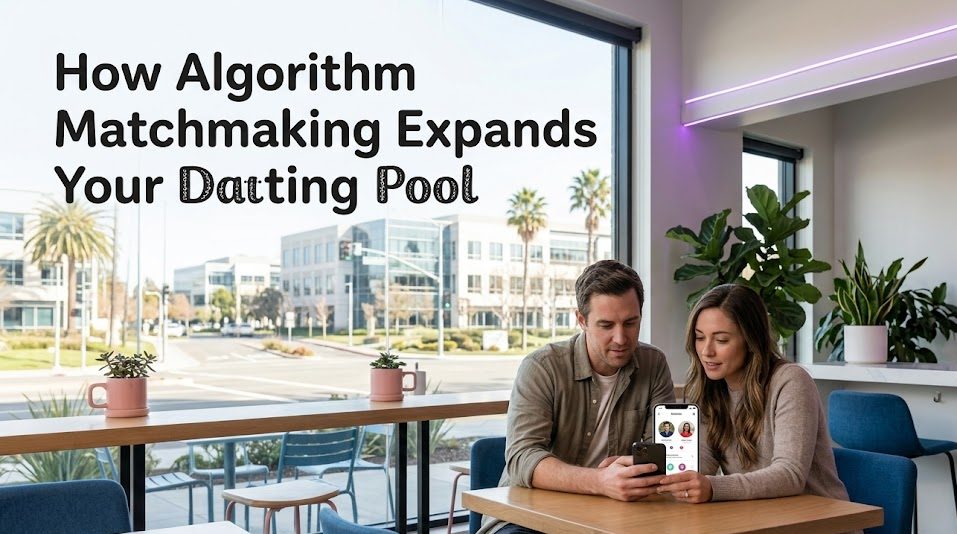
Silicon Valley code now competes with the oldest relationship adviser in the room, the family elder. One side studies profiles, preferences, behaviour and patterns; the other may rely on years of knowing the family, its values and the kind of person considered suitable. algorithm matchmaking is increasingly becoming a modern substitute for the human network that once helped families decide who might be a good life partner.
That comparison sounds neat until the numbers get involved. Research on online dating does not give us a simple story in which technology produces better marriages, while arranged marriages automatically produce more stable ones. In fact, studies point in several directions, depending on what is being measured, where the couples live and how much freedom they actually have in choosing a spouse.
The more interesting question, then, is not whether a machine or a family elder is better at choosing. It is what each system can see, what each one misses, and what happens after the introduction is made.
Algorithm Matchmaking Changes Who Gets Considered

A traditional family introduction usually starts with a relatively small social circle. Parents, relatives, friends or community members may already know something about both sides. An algorithm starts differently. It can scan thousands of profiles and rank people according to signals that would be impossible for one person to process manually.
That sounds like a huge advantage, but quantity is not the same as compatibility.
What Dating Algorithms Actually Measure
Most recommendation systems are designed to predict behaviour or engagement rather than guarantee a happy marriage. They can use information such as location, age, stated interests, activity patterns, preferences and previous interactions.
Research on reciprocal recommendation systems for online dating has shown that algorithms can estimate whether two people are likely to be mutually interested. Some systems perform better when they combine information about both sides instead of simply searching for similarity.
That distinction matters. A person can be highly compatible on paper but completely wrong in everyday life.
The Silicon Valley Advantage Is Scale
The biggest strength of an algorithm is not wisdom. It is scale.
A family might know 20 or 30 realistic candidates through its network. A dating platform can expose someone to hundreds or thousands of potential matches.
That changes the dating market in three major ways:
- geographic distance becomes less important
- people can meet outside their normal social circles
- niche preferences become easier to find
This is particularly useful for people who live in smaller communities or have unusual interests. Online dating can widen the pool instead of forcing someone to choose from whoever happens to be nearby.
The Algorithm Cannot Read Family Dynamics
A family member may know something a profile cannot easily reveal.
They might know how someone treats their parents, handles responsibility or behaves during a difficult period. Those observations can influence a recommendation even when they never appear in a questionnaire.
An algorithm can identify patterns from data. It cannot independently observe the dinner-table argument, the awkward family gathering or the way someone behaves when plans suddenly fall apart.
More Choices Can Also Create More Noise
There is another problem with abundance. More candidates can make dating feel like shopping.
People may keep comparing a current match with the next potential match rather than investing enough time to understand the person in front of them. The system can therefore increase access while simultaneously increasing indecision.
That is one reason it would be misleading to treat algorithmic matching as a technological upgrade of human matchmaking. It changes the entire environment in which romantic decisions are made.
Finding A Spouse Online Is Not The Same As Finding A Marriage Partner
The rise of finding a spouse online has changed how many couples meet, but the evidence on marital outcomes is much less dramatic than the marketing language around dating technology.
A large U.S. study of 19,131 people who married between 2005 and 2012 found that more than one-third of marriages began online. Interestingly, marriages that began online were slightly less likely to end in separation or divorce and were associated with slightly higher satisfaction among couples who remained married.
But a newer study complicates that picture. Research published in 2024 using 923 married U.S. adults found that people who met through online dating reported somewhat less satisfying and stable marriages than those who met offline. The researchers also found that the effects were modest and linked them partly to factors such as geographic distance, social marginalisation and network approval.
So, which study is right?
Both can be.
Where The Couple Met Is Only One Variable
Meeting online does not create a particular type of marriage by itself.
People who use dating platforms may already differ from people who rely on family introductions, workplaces or friendship circles. Age, education, location, social networks and relationship expectations can all influence the outcome.
That makes it dangerous to say, “Online couples divorce more,” or the opposite, “Online couples have better marriages.”
The evidence simply does not support such a clean conclusion.
A 2026 Study Adds Another Layer
A January 2026 National Bureau of Economic Research working paper examined changes in U.S. online dating and marriage markets across different periods. It found different associations between online dating exposure and divorce depending on whether researchers were looking at the desktop era or the mobile era. The study also found changes in how people were sorted by education, employment and race.
That finding is important because dating technology has not stayed the same.
The dating website of 2008 is not the same social environment as a swipe-based app in 2026. Treating all online dating as one phenomenon can hide major differences in how people meet and choose partners.
What This Means For Real Daters
Technology may be good at opening doors.
It is much less certain at telling people which door they should walk through.
Someone can use an app to meet a partner outside their usual community and still rely heavily on personal judgment once they start dating. In that sense, the algorithm often works best as a discovery tool rather than a final decision-maker.
Cultural Matchmaking Brings The Family Back Into The Equation
cultural matchmaking operates on a different philosophy. Instead of treating romantic compatibility as an individual decision, it often places the relationship inside a larger social structure.
That does not necessarily mean parents choose a spouse without consent. In many contemporary arranged-marriage systems, families introduce candidates while the individuals themselves decide whether to continue.
The distinction between arranged and forced marriage is therefore crucial. They are not interchangeable.
Research in India, for example, has examined arranged marriages as relationships shaped by family, religion and social expectations rather than simply as marriages where individuals have no choice. One study of 45 people in arranged marriages in India found no difference in marital satisfaction when compared with existing data on U.S. marriages of choice, although the groups differed in the importance they placed on particular marital characteristics.
Family Knowledge Can Become A Form Of Data
Before databases existed, families were already collecting information.
They remembered who was reliable. They knew which households had similar expectations. They knew whether two families shared a religion, language, class background or community.
The information was informal, incomplete and sometimes deeply biased. But it was still information.
In that sense, a family elder and a recommendation system are not completely different creatures. Both try to reduce uncertainty.
The difference is in the source of their evidence.
The Human System Has Its Own Blind Spots
Family involvement can provide support, but it can also create pressure.
A relative may favour social status, income, caste, religion, appearance or family reputation even when the person getting married has different priorities. A recent 2026 audit of AI-mediated matchmaking in South Asian contexts also raises a striking warning: technology can reproduce existing social hierarchies when the data and assumptions behind it already contain those biases.
So technology does not automatically eliminate cultural bias.
Sometimes it simply automates it.
The Famous Indian Matchmaking Debate
Netflix’s Indian Matchmaking became a useful cultural reference point because it brought professional matchmaking, family expectations and social preferences into mainstream conversation.
The series followed matchmaker Sima Taparia as she worked with clients seeking marriage while navigating expectations around caste, appearance, class and family approval. Critics argued that the show exposed how supposedly practical matchmaking can still reproduce social inequalities.
That debate mirrors the algorithm problem surprisingly well.
A match can look “compatible” because the system rewards traits that society already values. The question is not simply whether the match works. It is who decided what “works” means.
Data Driven Dating Cannot Predict Love With A Spreadsheet
data driven dating sounds wonderfully precise, but relationships remain stubbornly difficult to predict.
Machine learning can identify correlations. It can rank possibilities. It can detect behavioural patterns. None of that means it can guarantee emotional intimacy.
Research examining machine learning and romantic relationships has produced an especially uncomfortable finding. In a large study of thousands of couples, researchers found that many commonly expected partner traits were poor predictors of relationship satisfaction. A person’s own general happiness was among the stronger predictors of how happy they felt inside the relationship.
That changes the matchmaking question.
Perhaps the biggest predictor is not “Who is my perfect match?” but “How capable am I of building a healthy relationship?”
Similarity Is Useful But Not Everything
A good recommendation system might notice shared interests, education, lifestyle preferences or values.
But relationships also involve differences.
Two people can disagree about music and still build a great marriage. Two people can love the same films, share political opinions and have identical hobbies but communicate terribly during conflict.
Compatibility is therefore not a single score.
It is a moving combination of attraction, trust, communication, timing, expectations and the ability to repair problems.
Marriage Satisfaction Does Not Have One Cultural Formula
Cross-cultural studies reinforce this point.
Research comparing Asian Indians in arranged marriages with Americans in marriages of choice found significant differences in both the importance attached to marital characteristics and overall satisfaction patterns.
Research involving 456 Turkish couples similarly examined arranged and self-selected marriages through dimensions including love, partnership and relationship problems rather than treating “satisfaction” as one simple number.
The lesson is straightforward.
A marriage cannot be fairly evaluated without understanding the culture around it.
The Real Matchmaker Is What Happens After The Match
Whether two people meet through an aunt, a dating app, a friend, a religious community or a matchmaking service, the introduction is only the beginning.
The relationship then has to survive ordinary life.
Money. Work stress. Family boundaries. Illness. Different expectations about children. Sex. Household responsibilities. Career changes. Arguments. Boredom. Relocation.
No matching system can experience those things on behalf of a couple.
Modern Courtship Is Becoming A Hybrid System
The future is unlikely to be purely algorithmic or purely traditional.
modern courtship increasingly combines technology with human judgment. Someone may discover a partner through an app, investigate compatibility through conversations, ask friends for opinions and involve family before deciding whether the relationship is serious.
That hybrid approach may actually make more sense than choosing one system as the winner.
| Matchmaking factor | Algorithmic systems | Traditional family systems |
| Number of candidates | Very high | Usually limited |
| Geographic reach | Global or regional | Mostly local or network-based |
| Personal history | Limited to available data | Often known through relationships |
| Cultural context | Can be filtered or inferred | Often deeply understood |
| Potential bias | Data and design bias | Family and social bias |
| Speed | Fast | Usually slower |
| Emotional judgment | Limited | Human and contextual |
| Family involvement | Optional | Often significant |
The strongest model may therefore be one where technology expands the search while humans remain responsible for the decision.
Someone who meets a promising partner online can still ask the questions a family elder might ask. What does this person value? How do they treat people? What do they want from marriage? Are their expectations realistic? How do they handle disagreement?
Likewise, families can learn from the strengths of digital dating. A person should not be reduced to their family’s reputation, income or social background.
The most useful cultural shift may be happening in the middle.
People are gaining more freedom to find partners while still recognising that marriage is bigger than a matching score.
Q&A
Can an algorithm actually predict who will have a successful marriage?
Not reliably. Algorithms can estimate mutual interest or identify patterns associated with compatibility, but long-term relationship quality depends on factors that are difficult to measure before a relationship develops.
Do arranged marriages have lower divorce rates because they are better matches?
It is not safe to make that conclusion from divorce statistics alone. Divorce is affected by cultural attitudes, economic independence, legal systems, family pressure and access to separation. A low divorce rate can indicate stability, but it does not automatically prove higher happiness.
Should someone trust family matchmaking more than a dating app?
Neither should receive automatic trust. A healthier approach is to treat both as sources of information. A dating platform can expand the pool, while trusted people can provide context that a profile cannot. The final decision still needs to belong to the people entering the relationship.

Leave a Reply