Muzz vs Salams Evaluating the Best Muslim Dating Apps for Marriage
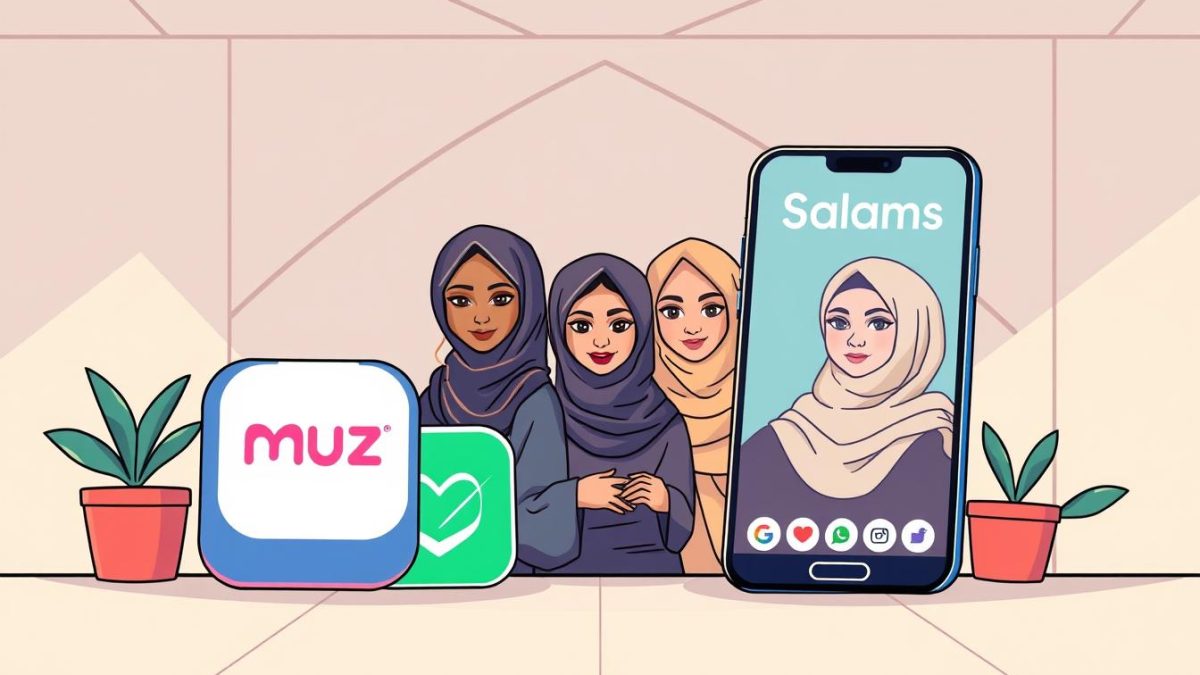
Swiping for a spouse can feel like a strange collision between modern dating culture and traditional Muslim values. The usual dating-app formula is built around quick attraction, endless profiles, and casual conversation, while many Muslims want something more intentional, private, and compatible with their faith. That is where the best Muslim dating apps try to create a different kind of experience, with features built around marriage, religious preferences, and safer communication.
Two of the biggest names in this space are Muzz and Salams. Both are designed for Muslims looking for meaningful connections, but they take noticeably different approaches. Muzz puts a strong emphasis on marriage-focused matching, religious filters, privacy, and its Wali feature. Salams combines marriage matching with a broader social experience through Salams Connect, while its paid tiers add tools designed to improve visibility and reduce ghosting.
So which one actually works better for marriage? Here is a feature-by-feature comparison based on the latest information available from both platforms.
Muzz vs Salams At a Glance

Before getting into the details, here is the quick scorecard.
| Category | Muzz | Salams | Winner |
| Marriage focus | Very strong | Very strong | Tie |
| Religious filters | Extensive | Strong | Muzz |
| Sect filtering | Yes | Yes | Tie |
| Wali support | Built-in Chaperone Mode | Chaperone encouraged | Muzz |
| Profile verification | Selfie verification | Selfie and location verification | Tie |
| Privacy features | Strong | Strong, especially with premium | Tie |
| Free matching | Yes | Yes | Tie |
| Advanced paid features | Gold | Gold and Diamond | Salams |
| Friendship/networking | Limited | Salams Connect | Salams |
| Anti-ghosting tools | Limited | Diamond Anti-Ghost | Salams |
| Best for serious marriage search | Excellent | Excellent | Depends on your priorities |
Muzz says it has more than 6 million global users on its help center, while other current Muzz pages display substantially different user figures. Salams currently advertises more than 3.8 million users across 100 countries. Because the companies present their statistics differently across pages, user totals should be treated as marketing figures rather than a perfectly comparable measurement.
Muzz Has the More Marriage-Centered Feature Set
Muzz feels more deliberately designed around the process of finding a spouse rather than simply meeting other Muslims.
Its profile system includes filters for age, location, sect, religious practice, family goals, and other preferences. Muzz also lets users set certain preferences as “must-haves,” which can make the search more focused when particular values really matter.
Religious filters go deeper on Muzz
For Muslims who care about compatibility in religious practice, this is one of Muzz’s biggest advantages.
The platform specifically allows users to filter by sect and religious preferences. Muzz also highlights filters related to prayer levels and family goals, making it easier to identify people whose expectations around marriage may be closer to your own.
This matters because two people can both identify as Muslim while having very different expectations about religious practice, family involvement, or marriage.
Chaperone Mode gives Muzz a practical Wali option
Muzz’s Wali feature is one of the clearest differences between the two apps.
Its Chaperone Mode allows a user to involve a wali in conversations by sharing weekly chat transcripts. Muzz also says the feature is available to help users remain mindful of their religious obligations while getting to know a potential spouse.
That makes the feature more than a decorative religious label. It is actually integrated into the communication process.
Privacy is treated as part of the dating experience
Muzz allows members to blur profile photos and reveal them to specific matches when they feel comfortable. Selfie verification is also used to help confirm that profiles belong to real people.
For someone who prefers modesty or simply does not want their photo openly visible to everyone, this can make the app feel considerably more comfortable.
The interface is still recognizably a dating app
Muzz has not completely abandoned the familiar swipe-based experience. Users can browse profiles, like or pass, and begin chatting after a mutual match.
That balance is important. The app still feels easy to understand, even though its feature set is built around marriage rather than casual dating.
Salams Takes a Broader Approach to Muslim Connections
Salams has a slightly different identity. It is not only positioned around marriage but also friendship and networking.
Its current website promotes Salams Love for finding a life partner and Salams Connect for making friends and networking. Connect is designed around same-gender friendships and networking, giving the platform a wider social role than Muzz.
Salams makes sect preferences easier to understand
Salams also gives users the ability to select a specific sect or choose “Just Muslim” when looking for potential matches. Its city-specific pages describe matching around preset parameters and religious preferences.
That makes the platform useful for people who want religious compatibility without necessarily narrowing their search to one specific interpretation.
Verification is built into the onboarding process
Salams says its team manually reviews users and that profiles are verified using selfie and GPS location checks. The company also emphasizes that there are no bots in its verification process.
That does not make online dating risk-free, of course. Verification can help reduce fake accounts, but users should still avoid sharing financial information or moving conversations off-platform too quickly. Salams itself warns users about scams, requests for money, suspicious links, and people who immediately ask to communicate elsewhere.
Salams Connect changes the overall experience
This is where Salams has a genuine advantage.
Salams Connect lets users create a separate profile for friendships and networking. The feature is designed to connect people of the same gender unless they specifically create a Salams Love profile.
For younger Muslims, converts, people living away from established communities, or anyone who wants to expand their social circle while looking for a spouse, this broader approach can be useful.
Which App Is Better for Halal Dating Online?
If your priority is halal dating online, the difference between Muzz and Salams is less about whether one is “Islamic” and the other is not. Both platforms deliberately position themselves around Muslim values and marriage.
The bigger difference is how much control each app gives you over the process.
Muzz is particularly strong if you want religious filters, privacy controls, and an integrated Wali option. Salams works well if you want marriage matching but also appreciate friendship and networking features.
Neither app can make a relationship automatically halal simply because you use it. Your communication, intentions, boundaries, and approach to meeting each other still matter.
Salams itself recommends keeping marriage intentions clear and discusses the use of chaperones for conversations and meetings.
Islamic Matchmaking Features Compared Side by Side
When it comes to islamic matchmaking, both apps move beyond the basic “like someone and see what happens” model.
| Feature | Muzz | Salams |
| Marriage intention | Yes | Yes |
| Sect preferences | Yes | Yes |
| Religious preferences | Strong | Strong |
| Family-related preferences | Yes | Available through profile/search tools |
| Wali/chaperone support | Integrated Chaperone Mode | Chaperones encouraged |
| Selfie verification | Yes | Yes |
| Location verification | Available as part of verification | Yes |
| Private photo options | Yes | Premium privacy controls |
| Voice/video communication | Available | Available |
| Friendship mode | Not a major focus | Yes |
Muzz’s religious filtering is particularly detailed, with the company specifically mentioning sect, prayer levels, family goals, and other values-based preferences.
Salams, meanwhile, puts more emphasis on flexibility. Users can pursue marriage through Salams Love or use Connect for same-gender friendships and networking.
For marriage minded singles, that distinction is important. If you already know exactly what you are looking for in a spouse, Muzz’s filtering system may feel more purposeful. If you want a wider Muslim social ecosystem around the search for a partner, Salams has the broader package.
Pricing and Premium Features Are Quite Different
Both apps allow users to start for free, but their premium strategies are not identical.
Muzz says users can browse profiles, match, and chat without paying. Its Gold membership is designed to unlock additional features for people who want more control over their search.
Salams also offers a free experience, but its premium structure is more layered.
Muzz keeps the free experience surprisingly usable
You do not have to subscribe simply to begin matching and chatting on Muzz. That is important because it lets users test the community before spending money.
Gold is positioned as a way to search more precisely and move through profiles with fewer restrictions.
Salams Gold focuses on search efficiency
According to Salams, its Gold subscription includes features such as unlimited messages, unlimited matches, seeing who likes you, advanced filters, undoing swipes, and stealth mode.
That makes premium more useful for people who are already active on the platform and want to increase their efficiency.
Diamond adds tools aimed at ghosting
Salams Diamond goes further with profile insights, additional visibility, Telegrams for initiating conversations, and its Anti-Ghost feature.
Salams says the Anti-Ghost system can prompt a user to respond or unmatch after 48 hours, helping reduce the frustrating pattern where someone keeps swiping while ignoring an existing match.
It is an interesting approach because ghosting is not just annoying in marriage-focused dating. It can waste time when both people are supposedly looking for a serious relationship.
What the Apps Feel Like in Everyday Use
On a basic UX level, both apps are easy to understand because they use familiar dating-app mechanics.
Muzz feels more focused. Its filters and marriage-related features are constantly pushing the experience toward compatibility.
Salams feels more social. Its Love and Connect modes make it easier to use the same platform for different kinds of Muslim connections.
That does not necessarily mean one interface is objectively better. It depends on how you date.
If you want a clean search process where religion, family expectations, and marriage goals are front and center, Muzz has the stronger product philosophy.
If you prefer an app that feels like a Muslim social network with marriage matching built into it, Salams may feel more natural.
For anyone evaluating dating-app usability more generally, it is also worth paying attention to basic mobile usability rather than only attractive screens. A technically polished interface still needs clear navigation and accessible interactions, much like the usability issues discussed in this mobile usability guide.
Safety and Privacy Should Matter More Than Swipe Speed
Neither app should be treated as a shortcut around normal online dating safety.
Muzz uses selfie verification, reporting tools, photo privacy controls, and its Chaperone Mode. Its users are also required to accept an Islamic Oath covering behavior and conduct on the platform.
Salams similarly uses profile verification and provides safety guidance covering financial scams, suspicious links, and requests for personal information.
Whichever app you choose, keep basic rules in place:
- Do not send money to a match.
- Avoid sharing your home address early.
- Keep conversations inside the app until trust is established.
- Verify important claims independently.
- Meet in an appropriate public setting.
- Involve family or a trusted chaperone when that fits your religious and cultural expectations.
- Do not confuse a verified profile with a verified personality or intention.
If you are moving from an app such as Tinder into a more marriage-oriented platform, the change is not only about features. It is also about changing the way you evaluate people. A useful comparison is our Tinder Platinum features review, especially if you want to understand how conventional dating-app mechanics differ from Muslim marriage platforms.
Muzz vs Salams Final Verdict
So, which one should you use?
Choose Muzz if:
- You want a strongly marriage-focused experience.
- Sect and religious filters are important to you.
- You want an integrated Wali or Chaperone feature.
- Privacy and photo controls matter.
- You want to narrow your search around family and religious expectations.
Choose Salams if:
- You want marriage matching plus friendship and networking.
- You like having separate Love and Connect experiences.
- You want advanced premium search tools.
- Ghosting is a major frustration and you are interested in Anti-Ghost features.
- You prefer a broader Muslim social environment.
Overall, Muzz gets the edge for focused marriage searching, particularly because its religious filters and Chaperone Mode are deeply integrated into the product. Salams is the more versatile choice if you want marriage, friendship, and networking under one roof.
Neither is automatically the right choice for everyone. The better app is the one whose matching tools fit your expectations about faith, family, communication, and marriage.
The real goal of a Muslim dating platform is not simply getting more matches. It is reducing the number of unsuitable ones while making it easier to recognize the people who genuinely share your values.
Q&A
Is Muzz better than Salams for marriage?
Muzz has a slight advantage for users who want a highly focused marriage search, especially because of its religious filters, family-related preferences, privacy controls, and Chaperone Mode. Salams is also strongly marriage-oriented but adds friendship and networking through Salams Connect.
Does Muzz have a Wali feature?
Yes. Muzz offers Chaperone Mode, which allows a wali to be involved in conversations through shared chat transcripts.
Can you use Salams for free?
Yes. Salams offers a free version, while paid Gold and Diamond subscriptions add features such as advanced filters, unlimited matches, profile visibility tools, and other premium functions.




Leave a Reply