3 Core Differences Between Digital Taaruf And Halal Dating Online
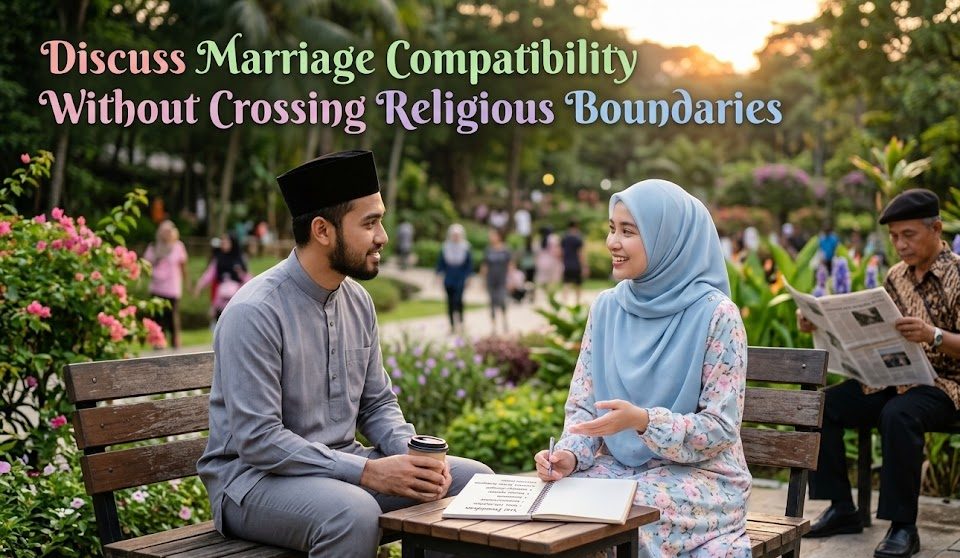
A religious label does not automatically make a dating method Sharia-compliant. An app can use words such as halal, Muslim, or marriage-minded while still leaving users to flirt privately for weeks with no meaningful safeguards. That is why halal dating online needs to be judged by the process behind the label, not the branding.
The Islamic framework starts somewhere different from ordinary dating culture. The purpose is marriage, but the path toward it still has boundaries. The Qur’an commands believing men and women to guard their gaze and chastity, while also encouraging marriage. The Sunnah also establishes limits around seclusion between a non-mahram man and woman.
That creates an important question for modern Muslims: if two people discover each other through an app, can technology simply replace the traditional structure of ta’aruf?
Not exactly.
Technology can be a tool for introductions. It does not remove the religious responsibilities that come with the interaction.
1. Digital Taaruf Starts With Marriage Intention, Not Casual Dating
Digital taaruf is better understood as a modern channel for an existing Islamic purpose rather than a religious version of ordinary dating.
The distinction begins with niyyah, or intention. A person looking for a spouse should have a reasonably serious purpose from the beginning rather than using religious language to make an ordinary romantic relationship feel permissible.
A recent academic discussion of online ta’aruf in Indonesia describes the process as an introduction toward marriage and notes the use of third parties such as religious teachers, trusted intermediaries, or ta’aruf institutions.
The Question Is Not Simply Whether The App Says Halal
A “halal” badge is not a fiqh ruling.
When evaluating an Islamic matchmaking platform, look at what actually happens after two people match.
Ask:
- Is marriage clearly the purpose?
- Can family or a trusted intermediary become involved early?
- Does the platform discourage flirtatious or prolonged private conversation?
- Are users encouraged to discuss serious compatibility issues?
- Is there a mechanism for reporting inappropriate behavior?
- Does the service make religious boundaries part of the process rather than merely its marketing?
Those questions tell you much more than the app’s name.
Serious Intent Changes The Conversation
Someone seeking marriage can reasonably need to ask about religion, family expectations, finances, work, location, children, health considerations relevant to marriage, and future plans.
That is very different from spending months exchanging romantic messages simply because both people enjoy the attention.
The goal is not to eliminate warmth or human connection. It is to prevent the getting-to-know-you stage from quietly becoming an unofficial relationship.
Ta’aruf Does Not Mean Marrying A Stranger
There is sometimes a misconception that Islamic courtship means two people should know almost nothing about each other until the wedding.
That is not the useful conclusion.
A prospective spouse needs enough information to make an informed decision. What changes is the method and boundaries used to obtain that information.
A structured process can still involve conversations, questions, meetings, family input, and observation of character.
Third-Party Involvement Has A Practical Purpose
Traditional ta’aruf commonly uses an intermediary or family involvement to keep the process transparent and focused. Research on online ta’aruf in Indonesia likewise describes third-party involvement as a feature used to help maintain Islamic boundaries.
That does not mean every digital introduction must use an identical procedure.
Fiqh details can differ between scholars and schools, so users should seek qualified local guidance for questions involving their specific circumstances.
2. Halal Dating Online Needs Religious Boundaries Inside The Chat
The biggest difference between a religiously structured introduction and ordinary app dating is what happens after the match.
A private chat can feel harmless because there is no physical room involved. But the absence of a physical room does not mean every form of communication automatically becomes appropriate.
The Qur’an tells believing men and women to lower their gaze and guard chastity. It also instructs the Prophet’s wives not to use an alluring manner of speech and instead to speak appropriately in the context addressed by the verse.
The broader principle is clear: communication should not become an excuse for deliberately creating romantic or sexual tension before marriage.
Digital Khalwa Is A Serious Scholarly Discussion
The phrase “digital khalwa” is sometimes used as though every private message automatically has exactly the same legal status as physical seclusion.
That is too simplistic.
Classical khalwa refers to physical seclusion between a non-mahram man and woman in circumstances where others cannot readily enter. SeekersGuidance explains this classical meaning while also discussing how certain private online interactions can create comparable concerns depending on their context and potential for inappropriate behavior.
So it is more accurate to say that private digital communication can create khalwa-like concerns or facilitate prohibited behavior, rather than casually declaring every one-to-one message legally identical to physical khalwa.
Private Messaging Becomes Riskier When It Becomes Romantic
There is a major difference between discussing marriage and building emotional dependency.
The risk increases when conversations involve:
- constant “good morning” and “good night” messages
- flirtation designed to create attraction
- sexual jokes or suggestive content
- exchanging intimate photographs
- deliberately hiding the relationship from family
- talking for hours every day without progressing toward marriage
- treating the other person like a boyfriend or girlfriend before nikah
The issue is not that every sentence between prospective spouses is automatically forbidden. The issue is whether the communication remains purposeful and within appropriate boundaries.
Religious Boundaries Should Shape The Process
If two people are serious, boundaries should be discussed early rather than after emotional attachment has already developed.
For example, they might agree to:
- Keep conversations focused on compatibility and marriage.
- Avoid flirtatious or intimate exchanges.
- Involve family or a trusted third party as the relationship progresses.
- Meet in an appropriate setting where Islamic guidelines can be maintained.
- Stop the process respectfully if either person decides they are incompatible.
That makes boundaries part of the system rather than an emergency brake.
The More Secretive The Relationship Becomes, The More Cautious You Should Be
A useful warning sign is secrecy.
If someone says, “Let’s not tell our families yet because they’ll ruin this,” that should prompt serious reflection.
The longer a connection depends on hiding itself, the easier it becomes for emotional attachment to outrun rational evaluation.
3. Islamic Courtship Is Structured Differently From Algorithmic Dating
Dating apps are designed around discovery, engagement, and continued use. That does not necessarily mean they are designed around Islamic marriage.
An algorithm can help two people discover each other. It cannot decide whether the resulting relationship follows Islamic ethics.
That distinction is central to islamic courtship.
Algorithms Optimize Matching, Not Religious Character
A dating platform might recommend someone because you share interests, location, age, education, or relationship preferences.
Those can be useful factors.
But compatibility in Islam also includes questions of faith, character, responsibility, and suitability for marriage.
The Qur’an presents marriage as a legitimate and encouraged institution, including an instruction to facilitate marriage for those who are unmarried.
An algorithm cannot replace the human judgment required to investigate whether someone actually lives according to the values they claim.
A Profile Is Not Evidence Of Character
Anyone can write “practicing Muslim” in a profile.
That tells you very little by itself.
Over time, you need to look at consistency. How does the person speak about parents? How do they handle disagreement? Are they honest about their circumstances? Do they respect boundaries when you set them?
These observations are often more valuable than a polished profile.
The Process Should Move Toward Accountability
A healthy marriage-focused introduction should become more transparent as interest grows.
That can mean involving parents, a wali where applicable, trusted relatives, or a knowledgeable intermediary.
The exact role of a wali in marriage also depends on the fiqh school and circumstances, so this is one area where blanket internet advice is not enough. For example, recognized Hanafi scholarship has detailed discussions about guardianship and marriage validity rather than treating the issue as a one-size-fits-all rule.
A Faster Process Is Not Automatically A Better Process
Ta’aruf is sometimes described as “fast” because it is not intended to become years of casual dating.
But fast does not mean careless.
You can still ask serious questions, verify important information, consult people you trust, and take enough time to make a responsible decision.
The objective is purposeful progress, not rushing toward nikah because two people happen to feel chemistry.
4. Meaningful Connections Should Still Be Possible Without Crossing The Line
Some people hear religious boundaries and assume the result must be cold, robotic conversations.
That is unnecessary.
Meaningful connections can develop through respectful communication. The important question is what kind of connection you are building and where you intend it to lead.
Ask Questions That Actually Matter For Marriage
Instead of filling the chat with endless small talk, discuss subjects that can reveal compatibility.
Useful areas include:
| Topic | Questions To Explore |
| Faith | How important is practicing Islam in daily life? |
| Family | What role should both families have after marriage? |
| Finances | How do you approach spending, saving, and financial responsibility? |
| Children | Do you want children and how would you approach their upbringing? |
| Career | Where do you expect to live and work? |
| Conflict | How do you normally handle serious disagreements? |
| Lifestyle | What does an ordinary week look like for you? |
| Marriage roles | What expectations do you have of a spouse? |
These conversations can be far more useful than trying to create artificial romantic chemistry.
Honesty Matters More Than A Perfect Profile
A person should be able to explain their circumstances honestly.
Do not hide major information because you are afraid the other person will reject you. Likewise, do not assume someone is suitable simply because their profile appears religious.
Verification matters.
Involve People Who Can See What You Cannot
Infatuation narrows attention.
A trusted parent, sibling, friend, scholar, or intermediary may notice inconsistencies that two emotionally invested people overlook.
This is one reason structured ta’aruf can be valuable even when technology is involved.
Know When To Stop
Not every introduction should become a marriage.
If values, expectations, attraction, location, family circumstances, or religious practice are fundamentally incompatible, ending the process respectfully can be a success rather than a failure.
The purpose is to find a suitable spouse, not to turn every match into a relationship.
5. How To Use A Dating App Without Turning It Into Ordinary Dating
A Muslim who uses an online platform for marriage should evaluate the platform by its process rather than its religious branding.
A practical framework looks like this:
Before matching
- Clarify your intention.
- Decide which religious and personal qualities are essential.
- Avoid presenting yourself in a way designed primarily to attract casual attention.
- Check whether the platform actually supports marriage-focused interaction.
After matching
- Introduce the purpose clearly.
- Keep communication respectful and relevant.
- Avoid sexual or romantic escalation.
- Ask substantive compatibility questions.
- Do not build an emotionally dependent relationship through constant messaging.
When interest becomes serious
- Bring trusted family or an appropriate intermediary into the process.
- Verify important claims rather than relying on profile information.
- Arrange meetings according to appropriate Islamic guidelines.
- Seek qualified religious advice where the fiqh question is specific or disputed.
This approach does not make technology inherently good or bad. It simply puts technology underneath the religious framework rather than allowing the app to define the framework.
If the process starts making you feel constantly attached to your phone, a digital break can also be useful. This 30-day digital detox guide can help with the broader problem of spending too much emotional energy on dating platforms.
And because much of the process happens through mobile interfaces, practical usability matters too. A difficult website can create unnecessary friction, so this mobile usability errors guide is useful for understanding common mobile problems.
6. The Real Difference Is The Framework, Not The App
The difference between ta’aruf and ordinary app dating is not simply whether the introduction happens through a phone.
It is the framework surrounding the interaction.
A marriage-focused process asks: Are we suitable for marriage, and can we investigate that responsibly within Islamic boundaries?
Ordinary dating culture often asks: Do we have chemistry, and where does this relationship go from here?
Those questions can overlap, but they lead to different priorities.
The Qur’an encourages marriage while establishing principles of modesty and chastity. The Sunnah establishes boundaries around seclusion, while contemporary scholars differ in how they apply those principles to digital communication.
So the safest conclusion is not that every Muslim dating app is automatically halal or automatically haram.
Instead, examine the actual behavior it encourages.
If a platform helps people identify serious marriage intentions, exchange relevant information, involve appropriate people, and maintain boundaries, technology can serve a useful purpose.
If it encourages endless private flirting, secrecy, emotional dependency, sexualized interaction, and casual relationships under a religious label, the label itself does not solve the problem.
That is the theological framework worth keeping in mind. The phone is only the tool. The religious boundaries still matter.
Q&A
Is Online Ta’aruf Allowed In Islam?
Online technology can be used as a means of introduction, but the interaction still needs to follow applicable Islamic principles. Contemporary discussions of online ta’aruf commonly emphasize marriage intention, appropriate communication, boundaries, and, in many models, third-party or family involvement.
Is Every Private Chat Between A Man And Woman Khalwa?
Not necessarily in the strict classical sense. Classical khalwa refers to physical seclusion. However, scholars have discussed whether certain private digital interactions can create similar concerns, particularly where the setting facilitates flirtation or prohibited behavior.
Should A Wali Or Family Member Be Involved Immediately?
Family and wali involvement can be important, but the exact legal requirements and timing differ according to circumstances and schools of fiqh. A qualified scholar should be consulted for a specific ruling rather than relying on a universal online rule.


Leave a Reply