The 30-Day Digital Detox That Finally Helped With Online Dating Burnout
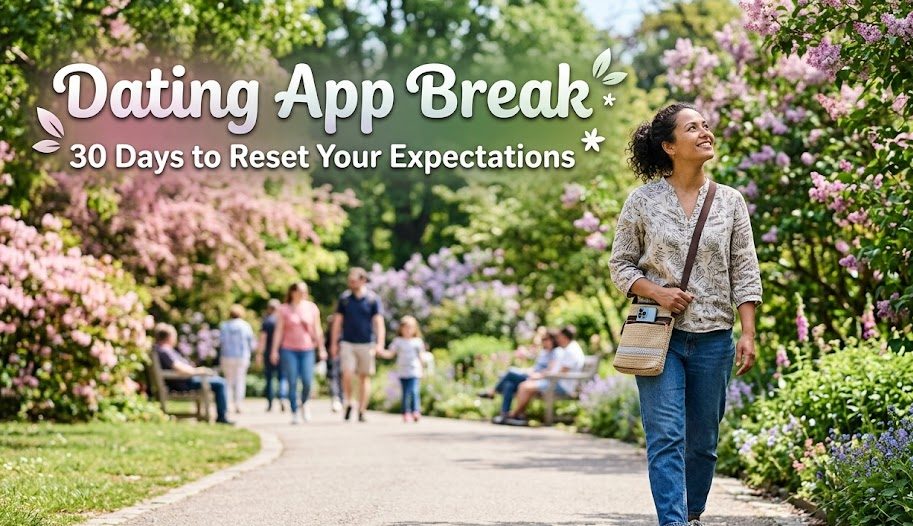
Tuesday night, I deleted every dating app from my phone and immediately felt guilty about it. Not relieved. Guilty. I had this strange feeling that somewhere out there, someone I would actually like was about to swipe right on me, and I was going to miss them. That was when I realized I had a problem with online dating burnout.
I wasn’t tired of meeting people. I was tired of the process surrounding it. The notifications, half-hearted conversations, disappearing matches, checking who had viewed my profile, and endless stream of profiles that started to blur together had turned dating into another daily task.
So I tried something that felt slightly ridiculous at first: 30 days without dating apps. It wasn’t a dramatic vow to delete my love life forever. It was a reset. I wanted to find out whether I actually disliked dating or whether I had simply become exhausted by the way I was doing it. What happened over those 30 days surprised me.
The Detox Started With Admitting Dating Had Become a Chore
The first step wasn’t deleting Tinder, Bumble, Hinge, or anything else. It was being honest about how I was using them.
I wasn’t opening the apps because I was excited to meet someone. Most of the time, I opened them because I was bored, lonely, procrastinating, or simply wanted a tiny hit of validation.
That distinction matters.
Dating apps are designed around small moments of anticipation. A new like, a match, a message, or an interesting profile can create a little burst of excitement. After enough repetition, checking the apps can become automatic.
The problem was that my behavior had become disconnected from what I actually wanted.
Before starting the detox, I wrote down three questions:
- Am I genuinely interested in dating right now?
- Do I enjoy talking to people on these apps?
- Am I using dating apps because I want a relationship or because I want distraction?
The answers made the decision much easier.
Dating fatigue can look surprisingly normal
My exhaustion wasn’t dramatic. I wasn’t crying over every bad date or throwing my phone across the room.
It looked much more ordinary.
I stopped getting excited about new matches. I would match with someone, exchange a few messages, and already feel tired about keeping the conversation alive. Even potentially interesting people started feeling like another notification I needed to deal with.
That is what made the problem easy to ignore.
Dating fatigue can hide behind routines that seem completely normal, such as checking an app while waiting for coffee or scrolling through profiles before bed. Nothing seems seriously wrong until you realize you’re doing something you don’t particularly enjoy several times a day.
The first three days felt stranger than expected
The first 72 hours were surprisingly uncomfortable.
I kept reaching for my phone automatically. There was no important reason. My brain simply expected the apps to be there.
Instead of reinstalling them, I replaced the habit with something deliberately boring. I went for walks, watched movies without checking my phone, cooked dinner, and let myself sit through moments of boredom.
That boredom was useful.
It showed me how often I had been using dating apps to fill empty spaces rather than because I actually wanted to connect with someone.
Dopamine fasting is less glamorous than social media makes it sound
People sometimes describe dopamine fasting as if you can magically reset your brain by avoiding everything enjoyable for a weekend.
That’s not really what I was trying to do.
The useful part was removing the constant cycle of anticipation and reward. I wasn’t trying to eliminate dopamine. I was simply taking away one source of repetitive stimulation.
For me, that meant no dating apps, no checking old matches, and no creating imaginary scenarios around people I had barely spoken to.
The goal wasn’t punishment. It was getting enough distance to notice what I actually missed.
I stopped treating every match like a potential relationship
One of the biggest changes was realizing how much pressure I had been putting on individual matches.
A match didn’t mean compatibility. A good conversation didn’t mean chemistry. A first date didn’t mean a relationship was coming.
Once those expectations disappeared, dating became much easier to understand.
A person could simply be someone interesting I met.
That sounds obvious, but the constant availability of potential matches had made every interaction feel like it needed to go somewhere.
Why Mental Health Dating Habits Matter More Than Another Matching Strategy
Taking a break isn’t just about spending less time on your phone. It can also expose the thoughts you’ve attached to dating.
During the detox, I noticed that my mood had become surprisingly dependent on small dating outcomes.
A match could make me feel attractive. Being ignored could make me question myself. A bad date could convince me that I was wasting my time.
None of those reactions were particularly helpful.
Mental health dating habits are often less about finding the perfect app and more about creating boundaries around how much emotional weight you give the process.
That doesn’t mean pretending rejection doesn’t hurt. It means not allowing a stranger’s lack of interest to become evidence that something is wrong with you.
I started using a simple rule: dating could influence my day, but it couldn’t determine my mood for the day.
That meant not checking for matches first thing in the morning and not ending the night by scrolling through profiles.
It also meant paying attention to how I felt after interactions.
If I regularly felt anxious, frustrated, or drained after using an app, I didn’t need another productivity trick. I needed distance.
My 30-Day Protocol Was Much Simpler Than I Expected

I divided the month into four stages instead of trying to completely reinvent my social life.
| Period | Main goal | What I changed |
| Days 1–7 | Break the habit | Deleted apps and stopped checking matches |
| Days 8–14 | Clear expectations | Reflected on what I actually wanted |
| Days 15–21 | Rebuild real-life routines | Focused on friends, hobbies, and offline plans |
| Days 22–30 | Reconsider dating | Decided whether and how to return |
The important thing was not following the schedule perfectly.
It was creating enough space to notice patterns.
Week one was about breaking automatic behavior
During the first week, I didn’t replace dating apps with another dating-related activity.
No checking profiles through a browser. No asking friends whether someone had messaged. No searching for dating advice every night.
I wanted a clean break.
The hardest part wasn’t missing potential dates. It was missing the habit itself.
Week two exposed my unrealistic expectations
Once the urge to check the apps became weaker, I started thinking about what I expected dating to provide.
I had quietly expected it to provide excitement, validation, companionship, romance, and sometimes even reassurance that I was desirable.
That’s a lot to ask from an app.
I wrote down what I actually wanted from a relationship and separated those needs from what a dating platform could realistically provide.
That exercise made my expectations much more grounded.
Week three brought back parts of my life I’d neglected
Without dating apps taking up small pieces of my attention, I had more energy for ordinary things.
I spent more time with friends. I started reading before bed again. I made plans without wondering whether they were interfering with a potential date.
None of this was revolutionary.
That’s exactly why it worked.
Dating shouldn’t consume the rest of your life just because you’re single.
Week four was about choosing rather than reacting
By the final week, I no longer felt like I was being pulled toward dating apps.
That gave me a much better position from which to decide whether I wanted to return.
Instead of asking, “What if I’m missing someone?” I could ask, “Do I actually want to use this right now?”
That is a very different question.
A Dating App Break Doesn’t Mean Giving Up on Dating
Taking a dating app break can sound more dramatic than it actually is.
You don’t have to declare yourself permanently unavailable. You can simply stop using a platform that currently isn’t making your life better.
There is also no rule saying that a break has to last 30 days.
For some people, three days might be enough to interrupt an unhealthy routine. Others may need several weeks before they stop thinking about the apps.
The point is to create enough distance that your next decision isn’t driven by habit.
When I eventually reinstalled one app, I made different rules.
I turned off unnecessary notifications. I didn’t swipe when bored. I limited how often I checked messages, and I stopped treating every match as an obligation to continue chatting.
Most importantly, I gave myself permission to delete the app again if I started feeling exhausted.
What Changed When I Stopped Endless Swiping
The biggest surprise was that I didn’t suddenly become better at dating.
I simply became more selective about when I participated in it.
Endless swiping had created the illusion that there was always another option. If a conversation became slightly difficult, it was tempting to move on because hundreds of other profiles were waiting.
But more options don’t automatically create better connections.
Sometimes they just make it harder to pay attention to the person in front of you.
After the detox, I started looking for a few basic signals instead:
- Is the conversation reasonably balanced?
- Does this person seem curious about me?
- Do I actually want to meet them?
- Am I continuing because I’m interested or because I feel obligated?
- Does interacting with this person leave me feeling good or drained?
Those questions were more useful than trying to optimize every swipe.
The Real Result Wasn’t Finding Someone New
The 30 days didn’t magically produce a relationship.
That wasn’t the point.
The real result was that dating stopped feeling like something I had to constantly manage.
I learned that taking a break doesn’t mean you’re giving up. Sometimes it means you’re making enough room to figure out what you actually want.
I also learned that dating fatigue isn’t necessarily a sign that you don’t want love or companionship. Sometimes you’re simply tired of the system you’ve been using to look for it.
And when you remove the pressure to constantly search, you may realize that your life isn’t on hold while you’re single.
If you’re spending more time online than enjoying your actual life, it may also be worth checking whether other digital habits are making things harder. For example, practical site issues can affect how people interact with mobile content too, and this guide on how to fix mobile usability errors offers a useful look at the technical side of mobile experiences.
Should You Try the 30-Day Reset?
A detox makes sense if dating apps regularly leave you feeling drained, distracted, anxious, or strangely disappointed despite having plenty of matches.
You don’t need to wait until things become unbearable.
Try asking yourself:
Keep using the apps if:
- You genuinely enjoy meeting people through them.
- You can handle rejection without spiraling.
- Your dating activity doesn’t interfere with daily life.
- You feel curious rather than obligated when opening an app.
Consider taking a break if:
- You open apps automatically whenever you’re bored.
- Matches affect your self-esteem.
- You feel exhausted before even going on a date.
- You’re constantly comparing yourself with other people.
- You keep swiping even though you don’t want to meet anyone.
A break won’t solve every dating problem. But it can give you something that apps rarely provide: perspective.
What to do when the detox ends
Don’t automatically reinstall everything on day 31.
Instead, decide what you want your dating life to look like first.
Maybe that means using one app instead of four. Maybe you prefer meeting people through friends, hobbies, classes, events, or everyday life. Maybe you discover that you’re perfectly happy staying off dating apps for a while longer.
There is no failure in any of those outcomes.
The useful part of a reset is that you’re making the choice consciously rather than letting an algorithm make it for you.
Q&A About Taking a Dating App Detox
Is 30 days really necessary?
No. Thirty days simply creates a clear boundary. The useful part is stepping away long enough to recognize whether you’re missing dating itself or just the stimulation of the apps.
Can a dating detox improve your dating life?
It can help you identify habits and expectations that are making dating stressful. It won’t guarantee better matches, but it can make your approach more intentional.
What if I meet someone during my break?
That’s completely fine. A detox from dating apps isn’t a detox from real life. If you meet someone naturally and want to explore the connection, you haven’t “failed” the challenge.
How do I know when it’s time to return?
Return when you’re interested in meeting people again rather than desperate for validation or afraid of missing out. If opening an app already feels exhausting, you probably aren’t ready.
The biggest lesson from my month away was simple: dating should be part of your life, not the place where your entire life happens. Sometimes the healthiest way to improve your dating experience isn’t another strategy, a better profile, or more swipes. It’s putting the phone down long enough to remember what you actually want.




Leave a Reply