Elite Singles Review Testing the Personality Test for Professionals
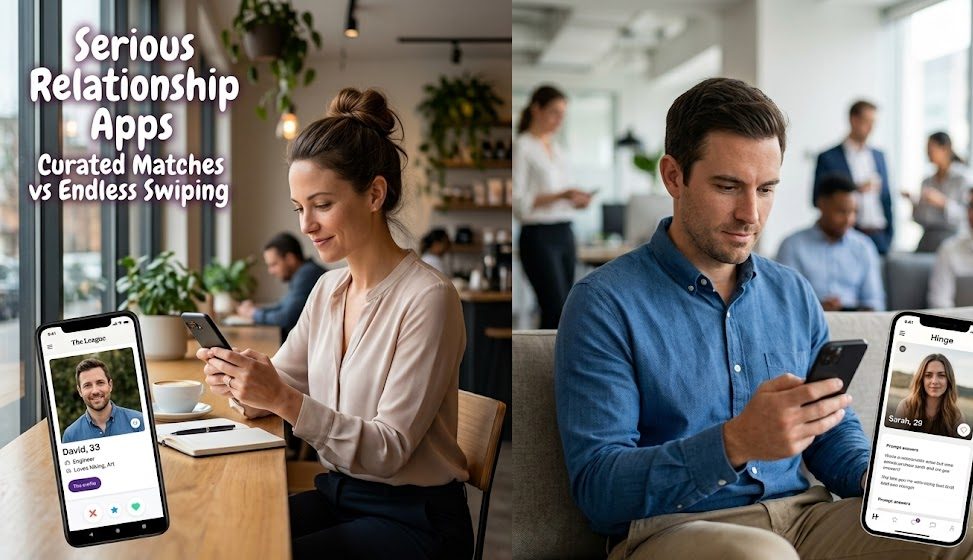
A five-minute personality quiz can tell you whether someone likes structure, novelty, or socialising. But can it really tell you who might become a great long-term partner? That is the question behind this elite singles review, especially because the platform puts so much weight on psychological matching. EliteSingles says its matchmaking process is based on the Five-Factor Model, using personality, lifestyle preferences, and relationship goals to generate compatible matches.
That sounds more sophisticated than endlessly swiping through photos. The catch is that personality science is not the same thing as romantic prediction. The Five-Factor Model is a legitimate framework for describing personality, but turning those traits into a recommendation for a specific person is a much bigger leap.
So rather than simply asking whether EliteSingles looks premium, this review takes apart the methodology. What does the personality test actually measure? Does it make the matching process smarter? And where does the science stop and the marketing begin?
What EliteSingles Actually Measures Before It Recommends a Match
The first thing to understand is that EliteSingles is not simply matching people based on education, occupation, age, or photos. Its current matchmaking explanation says the platform uses an in-depth assessment built around the Five-Factor Model, covering traits such as openness, conscientiousness, extraversion, agreeableness, and neuroticism.
That gives the system more information than a basic profile. It also explains why the platform feels different from a conventional swipe-first app.
The Five-Factor Model Is Real Psychology
The Five-Factor Model, commonly known as the Big Five, is widely used in personality psychology. Its five broad dimensions are:
- Openness which relates to curiosity, imagination, and willingness to experience new things
- Conscientiousness which reflects organisation, responsibility, and self-discipline
- Extraversion which concerns sociability, energy, and stimulation
- Agreeableness which covers cooperation, warmth, and interpersonal orientation
- Neuroticism which is associated with emotional sensitivity and vulnerability to stress
EliteSingles says these dimensions help it understand how users approach relationships, communication, lifestyle, and intimacy.
That part is important. The test is not pseudoscience simply because it appears inside a dating app. The underlying personality framework is legitimate.
The bigger question is what the dating platform does with the information.
A Personality Score Is Not A Compatibility Guarantee
Suppose two people have personality profiles that appear highly compatible. That can tell an algorithm something useful, but it cannot tell the whole story.
A relationship also depends on attraction, timing, communication habits, expectations, conflict management, lifestyle, family plans, finances, location, and plain old chemistry.
Someone can have a personality profile that looks fantastic on paper and still be a terrible conversational match.
This is where the distinction between personality matching and actual compatibility matters. The former gives the algorithm structured data. The latter develops through interaction.
The Questionnaire Is More Than A Five-Minute Quiz
The idea of a five-minute psychological test is also worth challenging. Available reviews describe the assessment as considerably longer, with some reporting around 20 to 30 minutes or more depending on the version and signup flow. One review describes a questionnaire of roughly 200 questions.
That changes the picture.
A genuinely detailed assessment requires effort. It is not something users should casually rush through while waiting for a coffee.
The advantage is obvious: more answers give the system more information. The disadvantage is equally obvious: users can become tired, answer mechanically, or choose what they think sounds attractive rather than what actually describes them.
Where The Methodology Starts To Get Interesting
EliteSingles combines personality information with relationship preferences and other profile data rather than relying on personality alone. The company says its recommendations consider personality, lifestyle preferences, and relationship goals.
That makes sense from a matchmaking perspective.
If someone is highly compatible on personality but wants children while the other person definitely does not, the personality score cannot magically solve that conflict.
The algorithm therefore needs multiple filters. The personality test is better understood as one layer of the matching system rather than a crystal ball.
Personality Matching Versus The Reality of Serious Relationship Apps

This is where the promise becomes more complicated. EliteSingles clearly positions itself around committed dating rather than casual swiping. Its current site describes the service as designed for people seeking genuine, lasting relationships and highlights a community of career-oriented members.
That positioning can be useful because intent matters enormously in online dating.
Still, a serious relationship is not created by putting two serious people into the same algorithm.
Why Professional Singles May Like The Curated Approach
One of the strongest ideas behind EliteSingles is reducing the amount of browsing.
Instead of throwing hundreds of profiles at someone, the platform has historically focused on a smaller set of recommended matches. Current EliteSingles materials describe three to seven compatible matches daily in its US experience.
That model has a psychological advantage.
Too much choice can make dating exhausting. A smaller selection encourages users to actually look at a profile instead of treating people like an endless catalogue.
For busy professional singles, that can be more appealing than spending an hour swiping without remembering anyone’s name.
But Fewer Matches Can Also Mean Fewer Chances
Curation only works when the underlying pool is strong.
If the recommendations are accurate, three thoughtful matches may be better than 50 random profiles.
If the recommendations are repetitive or poorly aligned, however, having fewer choices becomes frustrating rather than premium.
A Forbes Health tester reported repetitive match suggestions and limited engagement during testing, while also noting that profiles could contain useful career and education information.
That is an important reality check against the algorithmic promise.
Education Does Not Automatically Create Intellectual Chemistry
EliteSingles heavily emphasises an educated membership. Its US site currently claims that 85% of US members hold above-average education.
That can be attractive to users who specifically want someone with a similar educational background.
But education is a demographic characteristic, not a personality trait.
Two people can both have university degrees and have absolutely nothing to talk about.
Conversely, someone without the same academic background can be intellectually stimulating, curious, funny, and emotionally compatible.
This is why a good dating algorithm should use education as a preference rather than treating it as evidence that two people will connect.
The Real Test Happens After The Match
The most useful way to evaluate personality matching is therefore not to ask whether the test sounds scientific.
Ask what happens afterward.
Do the recommended profiles make you curious? Do conversations feel easier? Are the people actually aligned on relationship goals? Does the platform help you identify someone you would genuinely want to meet?
Those are much harder questions than calculating a personality score.
Is EliteSingles A Premium Dating App Or Just A Better Filter?
The word “premium” can mean two very different things in dating.
It can mean better technology, deeper profiles, stronger moderation, and more useful matchmaking.
Or it can simply mean a higher price and a more polished presentation.
EliteSingles has some legitimate premium characteristics. Its detailed assessment, curated recommendations, profile information, and focus on committed dating give it a clearer identity than many general-purpose apps.
But premium positioning does not remove the weaknesses of online dating.
The Personality Test Adds Value When Users Answer Honestly
The best argument for the test is simple: more information is usually better than less information.
A person who carefully answers questions about communication, lifestyle, values, and personality gives the system more useful material than someone who only uploads six photographs and writes “love travelling”.
But the quality of the output depends on the quality of the input.
Users who answer strategically can distort the results. Someone who wants to appear adventurous may choose adventurous answers. Someone who wants to appear emotionally stable may underestimate how they actually react under pressure.
No algorithm can completely correct for that.
The Algorithm Still Cannot Measure Chemistry
There is also a major blind spot.
Chemistry is difficult to quantify before two people interact.
A personality test may estimate that two users share compatible characteristics. It cannot reliably predict whether their humour will click, whether conversation will flow, or whether there will be physical attraction.
That is why personality matching should be treated as a screening mechanism, not a final verdict.
The same principle applies when comparing EliteSingles with other premium dating apps. A platform can create a sophisticated filter, but users still have to do the messy human part themselves.
For readers comparing different approaches to curated dating, the experience of The League’s waitlist and elitism is a useful contrast because it shows how a dating service can create exclusivity through a different mechanism.
The User Experience Still Matters More Than The Theory
A technically impressive matching system is not much use if the app produces inactive profiles, repetitive suggestions, or weak conversations.
That is why independent testing matters.
Forbes Health reported mixed tester experiences, including limited engagement and repetitive recommendations.
Meanwhile, other 2026 reviews remain more positive about match quality while criticising cost and the limited free experience.
The mixed results suggest something important: the algorithm cannot be evaluated separately from the local dating pool.
An excellent system cannot create chemistry if there are not enough suitable active members in someone’s area.
The Methodology Verdict On EliteSingles
So, is the personality test a marketing gimmick?
Not exactly.
The Five-Factor Model itself is not a gimmick. It is a recognised psychological framework, and using structured personality information is a more thoughtful starting point than matching people purely from photos. The problem appears when the sophistication of the framework is interpreted as proof that the resulting romantic matches must be accurate.
They are not.
The strongest part of EliteSingles is the attempt to reduce random browsing by combining personality information, preferences, relationship goals, and curated recommendations.
The weakest assumption is that psychological similarity can predict romantic success with enough precision to justify complete trust in the algorithm.
A better way to think about the service is this:
The test can help narrow the field. It cannot choose your partner.
That distinction makes the platform easier to evaluate.
| What The System Can Do | What It Cannot Reliably Do |
| Identify broad personality traits | Predict chemistry |
| Compare stated preferences | Guarantee attraction |
| Filter for relationship intentions | Predict how someone behaves on a date |
| Reduce random profile browsing | Guarantee a long-term relationship |
| Highlight potentially compatible people | Replace real conversations |
| Organise large amounts of profile data | Understand every human nuance |
For someone who enjoys a more structured dating experience, that can still be valuable.
For someone who wants spontaneity, a huge dating pool, or maximum control over who appears in their feed, the curated approach may feel restrictive.
The bottom line is surprisingly simple. EliteSingles has a more serious methodology than the average swipe-first dating app, but the psychological language should not be mistaken for a guarantee of romantic accuracy. Personality matching is useful when it helps people discover promising candidates they might otherwise overlook. It becomes questionable when users start treating a compatibility score as evidence that a relationship is destined to work.
And that is probably the fairest way to judge the platform. Don’t ask whether the test can find “the one”. Ask whether it can help you waste less time on people who clearly are not a fit.
That is a much more realistic job for an algorithm.
Q&A
Is The EliteSingles Personality Test Based On Real Psychology?
Yes. EliteSingles says its assessment is based on the Five-Factor Model, commonly called the Big Five. The framework measures openness, conscientiousness, extraversion, agreeableness, and neuroticism.
How Long Does The EliteSingles Personality Test Take?
The exact experience can vary, but available reviews describe it as substantially longer than five minutes. Some sources report approximately 20 to 30 minutes or more, with older descriptions mentioning around 200 questions.
Does Personality Matching Guarantee A Good Relationship?
No. It can help identify similarities and potential compatibility, but it cannot reliably predict chemistry, attraction, communication after conflict, or whether two people will build a healthy long-term relationship.


Leave a Reply