Online Dating Safety Tips That Help You Spot a Fake Profile Before You Meet
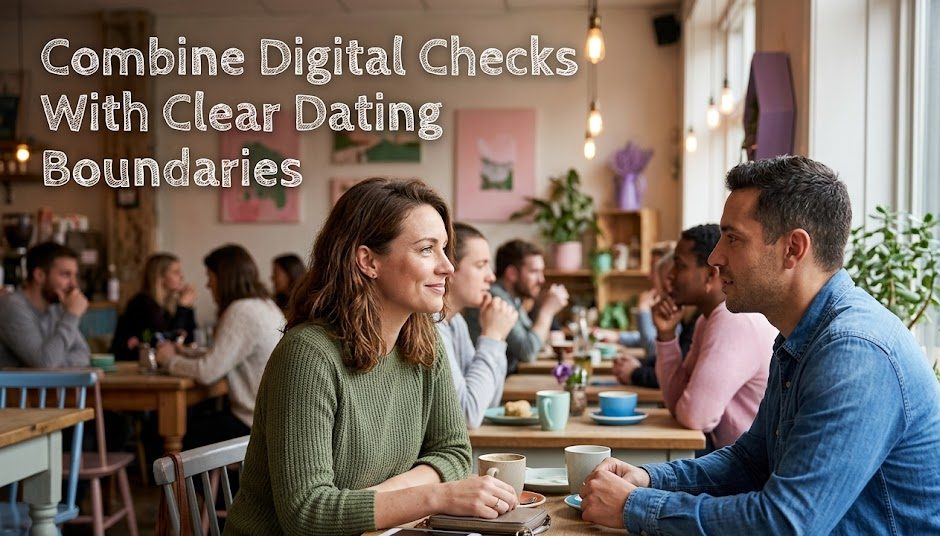
A dating profile can look completely normal and still tell you almost nothing about who is actually behind the screen. That is why online dating safety tips should go beyond meeting in a public place or telling a friend where you are going. Before you invest too much trust in someone, you can do a small amount of digital detective work to see whether their online identity makes sense.
This does not mean turning every date into a criminal investigation. You are simply checking whether the story, photos, usernames, and digital footprint are reasonably consistent. A few minutes of careful checking can sometimes reveal something that weeks of chatting would not.
The goal is not to find embarrassing information about someone. It is to answer a much simpler question: does this person appear to be the same person they claim to be?
Verifying Identity Starts With Small Details That Should Match
Verifying identity does not require expensive databases or complicated investigation tools. In many cases, the most useful clues are already sitting in front of you.
Start with the information the person voluntarily shares. Look at their name, username, location, occupation, interests, social media accounts, and the way they describe their life. Then ask whether those pieces fit together.
For example, imagine someone says they have lived in Manchester for five years, regularly posts about local football, and uses the same unusual username on several platforms. You may be able to find a public Instagram, Spotify profile, Reddit account, or other social account using that same handle.
One matching username does not prove anything. Plenty of people use the same username everywhere. What matters is the combination of clues.
1. Start With the Username, Not the Person’s Name
Usernames can be more useful than names because they are often unique.
Search the exact username in quotation marks and check several platforms. You might find that the same handle appears on Instagram, TikTok, Reddit, Spotify, GitHub, or an old forum.
Pay attention to:
- Whether the accounts appear to belong to the same person
- Whether the content spans several years
- Whether locations and interests make sense
- Whether profile photos are consistent
- Whether the account suddenly became active only recently
A digital footprint that has existed naturally over time is generally more convincing than a collection of accounts created within the same month.
Do not assume that finding a matching account automatically makes someone genuine. Fake profiles can copy usernames too. You are looking for consistency rather than a single piece of proof.
2. Compare the Story Across Different Platforms
This is where basic OSINT becomes surprisingly useful.
Suppose your match says they work remotely, love travelling, and have recently moved cities. Their dating profile might show a few polished travel photos. Their public social account, however, could reveal whether those details have a believable timeline.
You are not trying to uncover private information. Stick to information that is publicly available and avoid contacting friends, colleagues, or relatives to investigate someone without a legitimate reason.
The simplest test is consistency.
If someone says they moved to London last year but has public posts suggesting they have been living elsewhere for several years, that does not automatically mean they are lying. There may be an innocent explanation. It simply gives you a reason to slow down and ask questions rather than filling in the gaps yourself.
3. Watch for a Digital Footprint That Feels Manufactured
Real people do not necessarily have huge social media accounts. Someone having no Instagram or having a private profile is not suspicious by itself.
The stronger warning signs are combinations such as:
- Every account uses the same professional-looking photograph
- Multiple profiles were created recently
- Posts contain almost no personal context
- The follower/following pattern looks unusual
- Captions feel generic or copied
- Their online history does not match what they told you
Think of this as checking the texture of a profile. A genuine online presence usually contains ordinary, boring details. Old posts, random interests, imperfect photos, changing hobbies, and mundane moments can make an account feel much more organic.
A profile consisting entirely of attractive photos and vague inspirational captions is not proof of fraud, but it gives you less information to work with.
A Background Check Date Can Be Simple Without Becoming Invasive
A background check date does not have to mean digging through someone’s private life. For normal dating, the useful version is much narrower: confirm the public information they have already presented and look for major contradictions.
The easiest way to do this is to create a simple timeline.
| What they claim | What you can check | What you are looking for |
| Current city | Public posts and profiles | Location consistency |
| Job or industry | Professional/public profiles | Whether the career story makes sense |
| Social interests | Public accounts | Genuine history rather than copied content |
| Photos | Image search | Possible stolen or reused images |
| Username | Multiple platforms | Consistent identity |
| Recent life events | Public posts | Whether the timeline makes sense |
You do not need to investigate every detail. In fact, trying to verify everything can make dating unnecessarily exhausting.
Focus on claims that matter to your safety.
If someone says they are single, lives nearby, works in a particular field, and has used the same social account for years, you can check whether those basic claims appear plausible. If something does not match, ask before making assumptions.
Use a Reverse Image Search When the Photos Feel Too Perfect
A reverse image search is one of the most useful tools when you suspect someone may be using another person’s photographs.
Take one of their profile photos and upload it to a reputable image-search service that supports image matching. You are looking for results showing the same photograph somewhere completely unrelated.
A photo appearing on several dating profiles under different names is an obvious warning sign.
Finding the image on a modelling website, stock-photo site, or an old public social account can also explain why the person looks familiar.
But context matters.
Someone using the same photo on their dating profile and Instagram is normal. Someone using a photograph that belongs to a completely different person is not.
The reverse image search is therefore a clue, not a verdict.
You should also be aware that modern scammers can use AI-generated images or heavily edited photographs, which may not produce useful matches. A clean search result does not prove that the person is genuine.
Look at the Photo’s Timeline Instead of Only the Photo
One overlooked technique is checking when photographs appeared online.
If someone claims a photo was taken recently but the exact image appears publicly several years earlier under another person’s identity, that is much more concerning than simply finding a similar-looking image.
You can also compare the apparent age of different photographs. Major changes in hairstyle, technology, surroundings, or fashion can sometimes help establish whether images belong to the same period.
This is especially useful when a profile contains photographs that seem strangely disconnected from one another.
Again, you are not building a courtroom case. You are checking whether the pieces tell the same story.
Safe Dating Practices Work Better When Digital Checks and Real-World Boundaries Meet

Good safe dating practices are not about assuming everyone is dangerous. They are about keeping control of the situation while you get to know someone.
Digital checks are useful, but they should never replace common sense once you actually meet.
Before agreeing to a first date, consider whether the person respects ordinary boundaries. Someone who becomes angry because you will not share your home address, pressures you to move the conversation off the dating app immediately, or insists that you keep the relationship secret is giving you information that no search engine can provide.
Your interaction itself is part of the investigation.
Pay attention to how they react when you say no. A trustworthy person may be disappointed by a boundary, but they should not need to manipulate you into removing it.
Separate Red Flags From Simple Differences
Not every inconsistency is a scam.
Someone may have an old LinkedIn profile, use a nickname online, keep their Instagram private, or have photographs from different periods of their life. Those things can be completely normal.
What deserves more attention is a pattern.
For example, these combined behaviours are more concerning:
- Their identity details keep changing.
- They refuse reasonable questions about obvious inconsistencies.
- They pressure you to trust them quickly.
- Their photographs appear connected to other identities.
- They ask for money, financial information, or unusual favours.
- They avoid video calls while constantly making excuses.
- They push you away from the dating platform before trust has been established.
One strange detail can have an innocent explanation. Several independent warning signs pointing in the same direction deserve a pause.
Keep Your Own Digital Trail in Mind Too
Dating safety is not only about investigating another person. Think about how much information your own profiles reveal.
Public photographs can expose workplaces, favourite locations, home neighbourhoods, routines, family members, and even the places you regularly visit.
Before connecting with someone new, consider reviewing your own public profiles. Remove information you do not need to share and check whether old posts reveal more than you realised.
If you manage a website or online project, even technical details can sometimes reveal information about you. A basic site audit can be useful for privacy as well as SEO, much like checking how to fix mobile usability errors helps identify technical problems that are easy to overlook.
What to Do When the Evidence Does Not Add Up
The most important part of digital investigation is knowing when to stop.
You do not need absolute proof that someone is a scammer before deciding not to meet them. Dating is voluntary. If the available information makes you uncomfortable, you are allowed to step away without producing a complete investigation report.
If the person seems legitimate but one detail is confusing, ask a normal question and see how they respond.
If their explanation makes sense, you can continue getting to know them slowly. If they become defensive, change the story, attack you for asking, or pressure you to ignore what you found, that reaction becomes another piece of information.
And if you are using dating apps seriously, remember that profile visibility and app behaviour can change for technical reasons too. A sudden drop in matches, for example, does not automatically mean something suspicious about another user. Problems such as account visibility or ranking can have technical explanations, which is why guides like Tinder shadowban fixes and ELO rebuilding strategies can provide useful context when the issue is actually related to how the app is displaying a profile.
The point of OSINT-style checking is not to become paranoid. It is to replace blind trust with informed trust.
A practical rule is simple: verify what you reasonably can, protect what you do not need to share, and never let someone rush you past your own boundaries.
That approach makes dating safer without turning every new connection into a full-scale investigation.
Q&A
Is it safe to search someone’s dating profile online?
Checking publicly available information about someone you may meet is generally reasonable, especially when the goal is confirming basic identity details. Keep the search limited to public information and avoid invading private accounts or contacting unrelated people.
How can I tell if a dating photo is stolen?
Use a reverse image search and compare the results with the person’s claimed identity. A photo appearing under another person’s name, especially across multiple dating profiles, is a significant warning sign.
Does having no social media mean a dating profile is fake?
No. Some genuine people deliberately keep their social media private or do not use it. Look for patterns of contradictions rather than treating the absence of social media as proof of anything.


Leave a Reply