Enforcing Strict Dating App Boundaries to Protect Your Peace
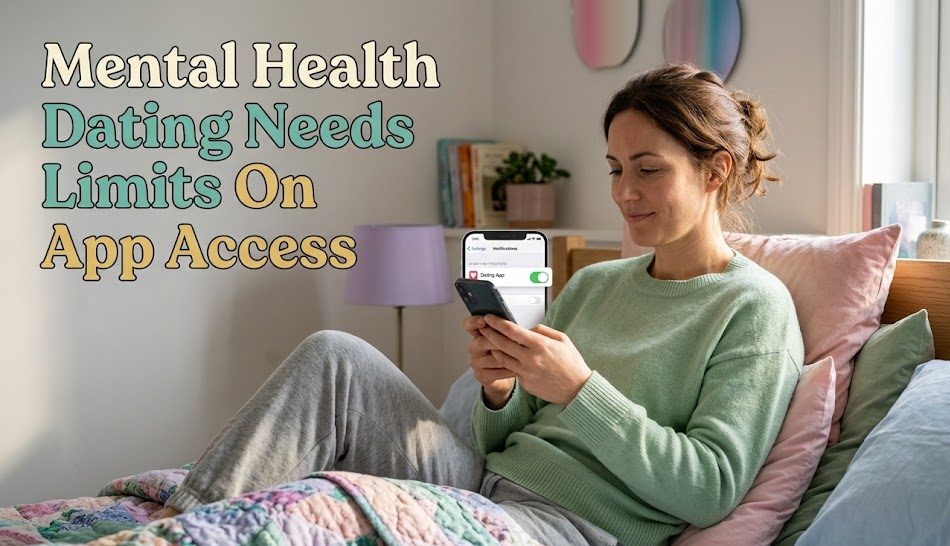
Downloading a dating app is a bit like opening the door to your mental living room and inviting thousands of strangers to wander in. Some are funny, some are charming, some are clearly lost, and a few will somehow behave as if they have already paid rent. dating app boundaries are the security protocol that decides who gets to stay, who gets limited access and who gets shown the door.
The problem is that many people treat boundaries as something they need to explain or negotiate. They do not. A boundary is not a request for someone else to behave perfectly. It is a rule for what you will do when an interaction stops feeling right.
That distinction makes blocking much easier, especially when someone has been rude, pushy, sexually inappropriate or simply exhausting. You do not need a courtroom case file before deciding that a stranger no longer deserves access to your attention.
Dating App Boundaries Start With A Clear Personal Filter
Before thinking about who to block, decide what you are actually protecting.
Your time? Privacy? Emotional energy? Physical safety? Your intention to find a serious relationship?
The answer will be different for everyone, but having the answer makes decisions much faster.
A 2025 review of dating-app-related technology-facilitated violence found risks including catfishing, stalking, harassment, abuse and physical violence, particularly in research examining women’s experiences. That does not mean every dating interaction is dangerous. It does mean that treating boundaries as an optional extra is a poor strategy.
Setting Boundaries Before The Match Saves Energy Later
setting boundaries becomes much easier when the rules exist before emotions get involved.
For example, decide in advance:
- I do not give my home address to someone I have just met.
- I do not send intimate photographs to strangers.
- I do not continue conversations that become sexually aggressive.
- I do not answer messages immediately just because someone expects it.
- I do not move to another messaging platform until I feel comfortable.
- I do not meet somewhere private for a first date.
- I can unmatch without providing a detailed explanation.
These are not punishments.
They are filters.
Your Phone Number Does Not Need To Be A First-Date Ticket
One common pressure point is moving from the dating app to WhatsApp, Instagram or a personal phone number.
There is no universal deadline for doing that.
If someone asks for your number after five messages and you would rather wait, “I prefer to stay on the app for now” is enough.
A respectful person may be disappointed, but they should be able to handle a reasonable boundary.
If they start demanding an explanation, repeatedly asking, guilt-tripping or suggesting that your hesitation proves you are not interested, the behaviour itself gives you useful information.
Tinder’s current safety guidance similarly recommends keeping conversations on the app while getting a better read on someone and only sharing personal details when it feels right.
Late-Night Conversations Need Their Own Rule
The 11:47 p.m. message can be surprisingly powerful.
You are tired. You are bored. The conversation suddenly becomes intimate. Someone asks questions they probably would not ask at lunchtime.
Then three hours disappear.
If late-night messaging regularly leaves you drained, make a rule around it.
For example:
No dating-app conversations after 11 p.m.
The exact time does not matter. The consistency does.
You are allowed to close the app because you want to sleep.
A Boundary Is Not A Debate
This is where many people get stuck.
They explain.
The other person argues.
They explain again.
The other person asks for exceptions.
Soon the boundary has become a negotiation.
Try a shorter approach instead:
“I’m not comfortable with that.”
Or:
“I’d rather keep things on the app.”
Or simply:
“I’m going to leave this conversation here. Take care.”
You do not need a five-paragraph justification.
Mental Health Dating Requires Controlling The Amount Of Access

Dating apps can create a strange form of emotional multitasking. Ten conversations are open, three people are waiting for replies and one person has already asked why you took 40 minutes to answer.
That can turn dating into unpaid customer service.
mental health dating therefore requires limits on access, not just better matches.
The goal is not to become emotionally detached. It is to stop strangers from gaining unlimited access to your attention.
The Notification Should Not Control The Relationship
Turn off notifications if every vibration makes you feel obligated to respond.
A match is not an emergency.
Someone who genuinely likes you should be able to tolerate the fact that you have work, friends, sleep, hobbies and a life away from the app.
A simple routine can help:
| Dating activity | Practical limit |
| Checking matches | 1–2 planned sessions daily |
| Messaging | Stop when the conversation feels draining |
| Late-night chatting | Set a personal cut-off |
| Moving off-app | Only when comfortable |
| First dates | Public place and manageable duration |
| Taking a break | Anytime dating starts feeling exhausting |
These are not universal rules. They are examples of how to turn vague intentions into something you can actually follow.
You Do Not Have To Reply Out Of Guilt
One of the biggest energy leaks is the belief that matching creates an obligation.
It does not.
You can stop responding because:
- the conversation feels one-sided
- attraction disappeared
- your priorities changed
- the person became disrespectful
- you are simply not interested
You do not owe every match a relationship, a date or a detailed rejection letter.
Politeness is good.
Self-abandonment is not.
Watch What Happens To Your Mood After Using The App
Your own reaction is useful data.
Ask yourself:
How do I usually feel after 30 minutes on this app?
If the answer is curious, amused or hopeful, great.
If it is anxious, irritated, inadequate or exhausted, something needs changing.
That could mean tightening your filters, reducing app time, changing how you communicate or taking a complete break.
Protecting Your Peace Does Not Mean Avoiding Rejection
Rejection is part of dating.
Boundaries are not designed to prevent every uncomfortable feeling.
They are designed to stop unnecessary exposure to interactions that repeatedly make you feel worse.
There is a difference between someone saying, “I don’t think we’re a match,” and someone repeatedly insulting you because you declined a date.
One is disappointing.
The other is behaviour you can leave.
Dating Intentionality Makes It Easier To Say No To The Wrong Conversation
When you know what you are actually looking for, random attention becomes less seductive.
dating intentionality means having enough clarity about your goals that a match does not automatically become an investment.
If you want a long-term relationship, for example, spending three weeks chatting with someone who openly wants something casual is not necessarily romantic persistence.
It may simply be poor filtering.
This is also where algorithmic matching becomes less important than personal judgement. Dating platforms can help narrow the pool, but the user still has to decide whether the relationship fits their life and expectations. For a broader look at how technology compares with traditional approaches to choosing partners, see this discussion of algorithm matchmaking and traditional arranged marriages.
Ask The Important Questions Earlier
You do not need to conduct a job interview on the first message.
But important incompatibilities should not be hidden forever.
Depending on your goals, that might include:
- relationship intentions
- children
- religion
- location
- lifestyle
- availability
- expectations around exclusivity
The point is not to interrogate someone.
It is to avoid building emotional momentum around a relationship that was never going in the same direction.
Do Not Confuse Chemistry With Constant Availability
Someone texting all day can feel exciting.
But constant communication does not automatically equal compatibility.
A person can send 100 messages and still be unreliable when it comes to real-world plans.
Pay attention to consistency rather than volume.
Does the person respect your schedule?
Do they keep plans?
Can they handle disagreement?
Do they listen when you say no?
Those behaviours tell you more than a perfectly entertaining chat.
Your Dating Goal Can Change
Maybe you joined an app looking for something serious and then realised you are not ready.
Maybe you started casually and now want commitment.
Maybe you simply want a break.
Your boundaries are allowed to change with your circumstances.
You do not need to keep following an old dating strategy because you announced it in your profile two months ago.
Avoiding Toxic People Gets Easier When You Recognise The Pattern Early
avoiding toxic people is not about diagnosing strangers from three messages.
It is about noticing behaviour that repeatedly crosses reasonable lines.
Some red flags are obvious.
Others are subtle enough to become normal if you keep making excuses for them.
The Person Who Ignores “No” Is Giving You The Answer
This is one of the simplest tests.
You say no.
They keep pushing.
You say you are uncomfortable.
They tell you that you are overreacting.
You ask them to stop.
They continue.
At that point, you do not need more evidence.
The boundary itself has been violated.
Love Bombing Can Make Boundaries Feel Rude
Someone may call you “the one” after two days.
They may send dozens of messages, talk about your future together and become intensely affectionate before you have even met.
It can feel flattering.
It can also create pressure.
The healthy response is not necessarily to assume malicious intent. Instead, slow the pace down and watch whether the person respects your comfort.
Someone who genuinely likes you should not need to rush intimacy.
The Energy Vampire Is Not Always Obviously Toxic
Some interactions are not abusive.
They are simply exhausting.
Every conversation becomes a complaint. Every message demands reassurance. Every attempt to change the subject returns to their problems.
You finish chatting and feel like you have completed a shift.
That is enough reason to step away.
You do not need to prove that someone is objectively toxic before deciding that their communication style is not good for you.
Blocking Is A Tool, Not A Moral Verdict
Blocking someone does not necessarily mean:
“They are a terrible human being.”
It can simply mean:
“I do not want further contact.”
Dating apps recognise this distinction through tools such as blocking and unmatching. Tinder currently states that users can block profiles proactively, while unmatching removes the conversation and prevents further messaging.
That is exactly how these tools should be understood.
They are access controls.
Use them when access is no longer welcome.
A Simple Boundary Framework For Blocking Without Guilt
There is no prize for staying polite to someone who makes you uncomfortable.
If the interaction crosses a serious line, blocking can be the cleanest response.
Use this four-step filter:
1. Notice The Behaviour
Ask yourself what actually happened rather than what you hope it means.
Did they repeatedly ignore a request?
Did they insult you?
Did they pressure you for personal information?
Did they become sexually explicit without consent?
Did they threaten or intimidate you?
2. Decide Whether A Warning Is Appropriate
Not every awkward moment requires blocking.
If someone simply misunderstood a preference, you can clarify.
If someone is repeatedly crossing a clear boundary, you do not have to keep teaching them.
3. Use The Appropriate Tool
Depending on the situation, that might mean:
- unmatching
- blocking
- reporting
- stopping replies
- taking a break from the platform
For behaviour that violates platform rules, reporting is appropriate. Tinder’s current reporting guidance allows users to report profiles or conversations directly through the app.
4. Do Not Reopen The Door Because You Feel Guilty
This is the part people underestimate.
You block someone.
Then you wonder whether you were too harsh.
Then you unblock them.
Then the same behaviour starts again.
If the original reason for blocking has not changed, your decision does not need to change either.
Q&A
How do I know whether I am being too strict with dating app boundaries?
Ask whether the boundary protects a genuine need or simply prevents normal vulnerability. “I do not share my home address immediately” is a sensible safety boundary. “They took 20 minutes to reply, so they are banned forever” may be an unnecessary reaction. Good boundaries create comfort without requiring perfection from everyone.
Should I explain why I am blocking someone?
Usually, no explanation is required when someone has made you feel unsafe, pressured or seriously uncomfortable. If the interaction was harmless but simply not a match, a short closing message can be considerate, but it is still optional.
What should I do if someone keeps contacting me after I block them?
Do not engage to convince them to stop. Use the platform’s blocking and reporting tools, preserve relevant evidence if the behaviour is threatening or abusive, and consider additional safety steps if the contact moves beyond the app. Platform safety guidance recommends blocking, unmatching or reporting when behaviour crosses a line.



Leave a Reply